Rats in lofts are a growing concern across the UK. In 2023, local authority pest controllers visited residential homes 271,343 times to tackle rodent infestations, averaging 743 visits every single day. Meanwhile, estimates suggest there are between 10.5 million and 120 million rats in Britain, a staggering figure that highlights how widespread the issue is. These statistics reveal not just a nuisance but a public health concern, with rats causing structural damage, spreading disease, and infiltrating living spaces. For Wiltshire homeowners, particularly in older properties, the loft often becomes a prime target. This makes understanding signs of rats in the loft, knowing how do rats get in the loft, and learning how to get rid of rats in loft crucial for keeping your home safe, clean, and rat-free.
If you hear scratching or scampering above your bedroom at dusk or dawn, you might have rats in loft spaces around Trowbridge or Salisbury. These nocturnal pests are active at night and will keep you awake.
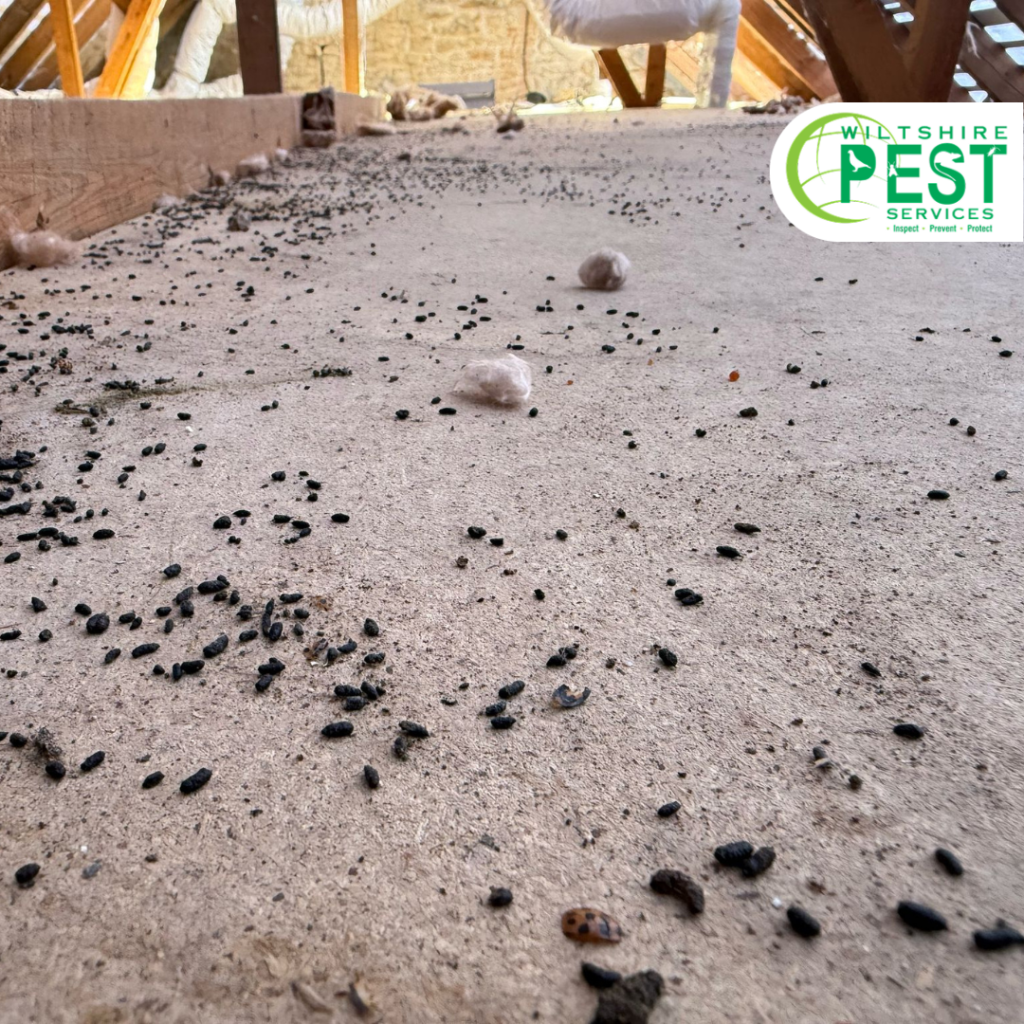
Dark, rice‑shaped droppings along rafters, boards or insulation are a clear sign. Greasy smears from repeated routes and a strong ammonia‑like smell are also red flags.
Rats chew relentlessly. Look for chewed wood, plastic, and wires in the loft. They shred insulation and use soft materials, like cloth, paper or dried leaves to build nests.
Roof tiles may shift after winter storms in Wiltshire, leaving entry points. Gaps under fascias or broken soffits allow rats to squeeze in.
Rats climb easily using ivy, drainpipes, or cables. Even a metre-high ivy wall can be an easy bridge into your loft.
In UK homes, common entry points include broken roof joints, uncapped flues and worn flashing around dormers. Old barns converted into homes in rural Wiltshire are especially at risk.
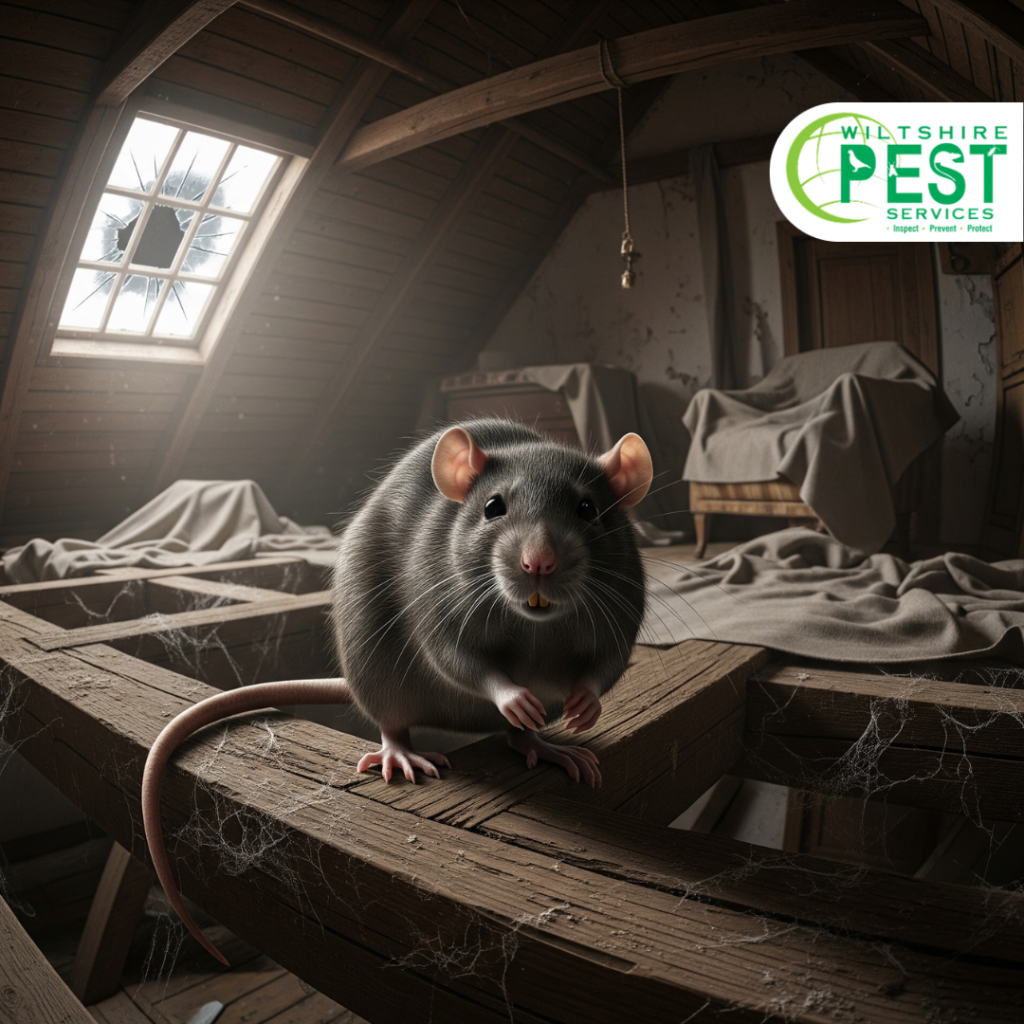
In Britain, “loft” and “attic” are often used interchangeably. Technically, an attic is a habitable space, whereas a loft is an unused storage area, but both are ideal pest hiding spots.
Rats prefer dark, undisturbed areas and seek warmth, food and nesting materials. They’re just as happy in an attic as in a loft.
Whether you call it an attic or loft, pest control concerns remain the same. Wiltshire Pest Services Ltd uses the same proven methods to target rats in these spaces.
Use snap traps or enclosed bait stations with approved rodenticides. Avoid DIY loose bait, it’s unsafe for children, pets and wildlife.
Always wear gloves and keep bait stations secure. Seal droppings in plastic waste bags and dispose of them with general rubbish. Don’t touch droppings or nests with bare hands.
If you have persistent rat noise, or droppings near water tanks or electrics, it’s time to call Wiltshire Pest Services. Our team will inspect, remove rats, disinfect and seal entry points. Learn more on our rat control page.
Rats can chew through plasterboard or follow pipework and cables to reach living areas. They make their way into walls or floor voids from the loft.
Rustling sounds in cupboards or walls at night, or fresh droppings in hallways or bedrooms, are worrying signs.
Ensure loft entry points are sealed, roof tiles intact, and loft hatches are tight-fitting. Block holes around pipes and cables. Regularly inspect the loft, especially after storms.
DIY control can work in mild cases, but people often fail at locating all entry points or use unsafe bait. Mistakes include placing bait near pets or not checking traps regularly.
Experts assess the risk, set traps or baits, apply disinfectant and seal holes. Wiltshire Pest Services also offers proofing work and follow‑up visits until the rats are gone.
Look for companies with BPCA certification, public liability insurance, and local experience. At Wiltshire Pest Services Ltd, our team is fully insured, trained and registered. Visit our dedicated rat control page to find out more.
Look for scratching noises at night, dark droppings, a strong ammonia smell, or chewed insulation. These are the most common signs of rats in loft spaces
Rats seek warmth, food crumbs, water, and nesting materials. Loft spaces often provide quiet, undisturbed shelter, especially in winter or in cluttered roof voids.
Yes. Rats chew wires, wood, and plastic pipes, which can lead to fire risks and water damage. Their droppings and urine can also contaminate insulation and storage items.
Only if used correctly. Loose poison is risky for pets and children. It’s best to use sealed bait stations or call a professional to ensure safe application.
Absolutely. Wiltshire Pest Services Ltd offers local expertise, safe removal techniques, and prevention strategies tailored to Wiltshire properties. Visit our rat control services page to learn more.

– SEASONAL TIPS & NEWS –
Our Recent Posts
Wiltshire Pest Services Limited offers professional pest control treatments across Wiltshire and surrounding areas. Whether you’re dealing with rodents, insects, birds, or require proofing solutions, we are here to help in the following locations:
We also cover properties within the SN, BA, and SP postcode areas, ensuring homes and businesses receive fast, reliable, and discreet pest control services.
If you’re unsure whether we cover your location, contact us today, and we’ll be happy to assist!
– TOWNS WE SERVE –
🐭 We Keep Digital Pests Under Control Too!
We use cookies (the good kind) to make your visit smoother, help us understand how our site is used, and improve your experience. By clicking "Accept All", you're allowing us to trap these digital critters responsibly.
Websites store cookies to enhance functionality and personalise your experience. You can manage your preferences, but blocking some cookies may impact site performance and services.
Essential cookies enable basic functions and are necessary for the proper function of the website.
These cookies are needed for adding comments on this website.
Google Analytics is a powerful tool that tracks and analyzes website traffic for informed marketing decisions.
Statistics cookies collect information anonymously. This information helps us understand how visitors use our website.