Did you know that between 2023 and mid-2025, more than 518,000 rat infestations were reported across the UK? Reports show that rat activity peaks during colder months when food becomes scarce, and warm buildings offer ideal shelter. Wiltshire, with its mix of historic towns, farmland, and riverside villages, faces particular risks during winter. For homeowners and businesses, understanding how to manage a rat infestation Wiltshire winter problem is essential for health, safety, and property protection.
This guide covers everything you need to know about preventing rat infestations in Wiltshire, with practical tips, local insights, and advice on when to call professionals for help.
Rats don’t hibernate. When temperatures drop, they become even more determined to find food and warmth. This makes barns, lofts, cellars, sheds, and even cavity walls perfect hiding spots. Wiltshire’s rural and semi-rural landscape, particularly areas around the River Avon, the Wylye Valley, and Salisbury Plain, provides plenty of natural habitats. However, when the cold sets in, these rodents often migrate towards human settlements.
Some key reasons winter is such a high-risk period include:
Without proactive steps, residents across Chippenham, Devizes, Marlborough, and surrounding villages may face an unwanted rise in rat activity.
Understanding the risks reinforces why prevention matters. Rats are more than a nuisance; they pose real threats to homes, businesses, and health.
By practising winter rat protection UK strategies, households and businesses can avoid these costly consequences.
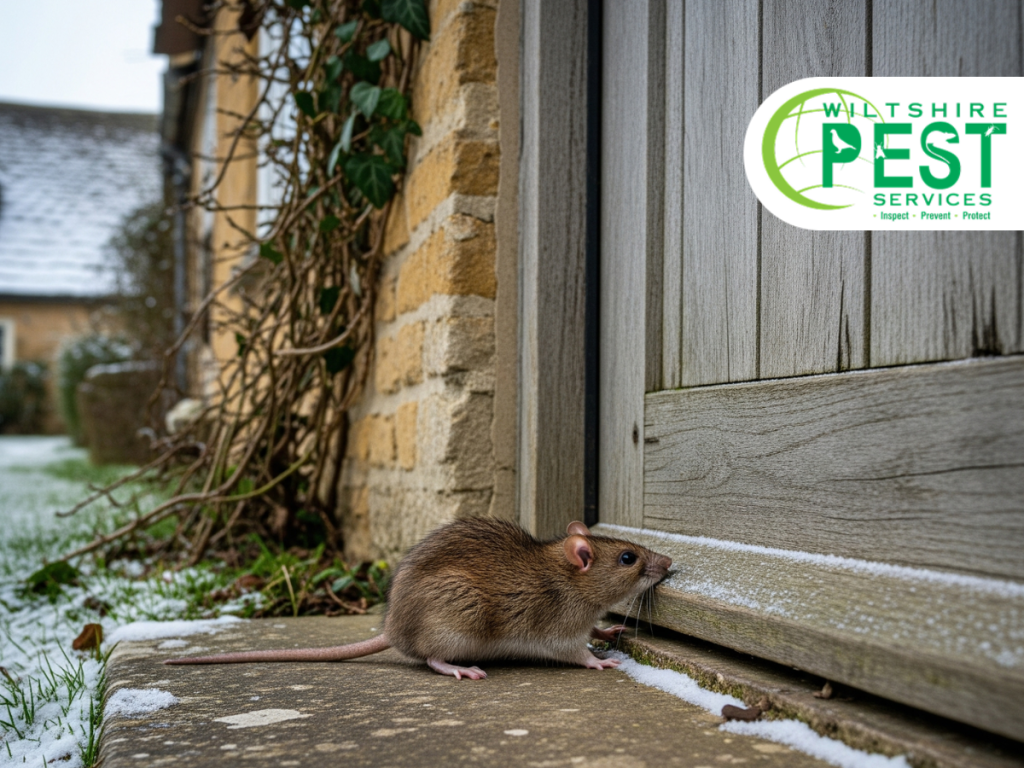
Here are the most effective Wiltshire rat control winter tip strategies:
Rats can squeeze through gaps as small as 10–15mm. Inspect external walls, doors, windows, and foundations. Pay attention to older stone properties in Marlborough and Devizes, where natural erosion leaves cracks. Fill gaps with steel wool, mesh, or cement – not plastic or wood, which rats can chew.
Wiltshire’s mix of period cottages and modern housing means many roofs have weak points. Loose tiles, broken soffits, or holes in eaves provide entry. Check your loft for droppings, shredded insulation, or gnaw marks. In rural areas, barns and stables are prime targets and must be secured.
Bins are hotspots for rat activity. Use sturdy containers with tight lids and never leave waste bags on the ground. In towns like Trowbridge and Swindon, where wheelie bins are collected weekly, it’s vital to avoid overflowing. Avoid leaving bird seed or pet food outside overnight.
Wiltshire gardens often feature compost heaps, but these can attract rats. Place compost bins on hard surfaces, away from walls, and never include cooked food scraps. Secure lids tightly to reduce attraction.
Overgrown hedges, piles of leaves, or stacked logs create cover. Regularly cut back vegetation, clear ivy from walls, and raise firewood off the ground. Villages around the Cotswolds often have large gardens that require particular attention.
Dripping outdoor taps, blocked gutters, or standing puddles invite rats. During winter, check that drainage systems are clear, especially in flood-prone areas near the River Nadder or Kennet and Avon Canal.
Early detection prevents infestations from escalating. Signs include droppings, gnawed wires, greasy smears along walls, and scratching sounds at night. Wiltshire residents in older terraced houses or farm cottages should pay extra attention to cellars and outbuildings.
When infestations take hold, DIY measures may not be enough. Local pest control experts can assess entry points, deploy safe baiting systems, and offer proofing solutions. Learn more about our Rat Control Services for detailed help.
Wiltshire’s geography makes winter rat control especially important.
By recognising these patterns, Wiltshire homeowners and businesses can adapt prevention strategies to their environment.
It’s important to clear up misconceptions that lead to poor prevention.
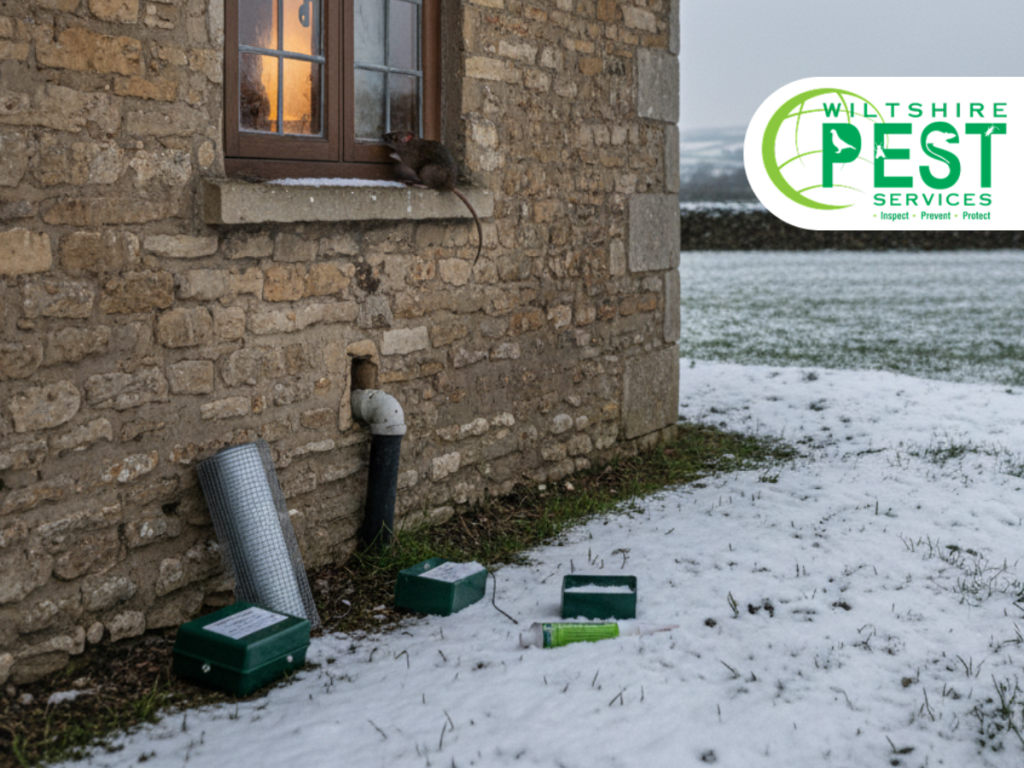
Even with the best preventing rat infestations in Wiltshire efforts, problems can occur. Call a professional if:
Our Rat Control page outlines professional methods, including proofing, safe baiting, and long-term monitoring.
Rats move indoors during cold months because food is scarce outdoors and buildings provide warmth. Historic homes and rural outbuildings across Wiltshire make perfect shelters, so rat infestations in winter are common.
Look for droppings, gnaw marks, scratching noises at night, and greasy smear marks along walls. If you spot these, it’s time to consider professional rat control.
Seal gaps around pipes, doors, and roofs, keep bins closed, and trim garden vegetation. Following these winter rat protection tips reduces the chance of entry.
Yes, if the entry points remain open or food sources are still accessible. For long-term results, combine proofing with rat control services.
If you see rats during the day, notice chewed wires, or DIY methods fail, contact local experts immediately. They will provide tailored solutions for your property.

We also cover properties within the SN and BA postcode areas, ensuring homes and businesses receive fast, reliable, and discreet pest control services.
If you’re unsure whether we cover your location, contact us today, and we’ll be happy to assist!
-Service Areas-
Wiltshire Pest Services Limited offers professional pest control treatments across Wiltshire and surrounding areas. Whether you’re dealing with rodents, insects, birds, or require proofing solutions, we are here to help in the following locations:
🐭 We Keep Digital Pests Under Control Too!
We use cookies (the good kind) to make your visit smoother, help us understand how our site is used, and improve your experience. By clicking "Accept All", you're allowing us to trap these digital critters responsibly.
Websites store cookies to enhance functionality and personalise your experience. You can manage your preferences, but blocking some cookies may impact site performance and services.
Essential cookies enable basic functions and are necessary for the proper function of the website.
These cookies are needed for adding comments on this website.
Google Analytics is a powerful tool that tracks and analyzes website traffic for informed marketing decisions.
Statistics cookies collect information anonymously. This information helps us understand how visitors use our website.