Signs of a Wasp Nest
Wasps Flying In and Out of One Spot
A regular line of wasps going in and out of the same gap, such as under roof tiles, behind fascias, through an airbrick or into a hole in the lawn, almost always means a nest.
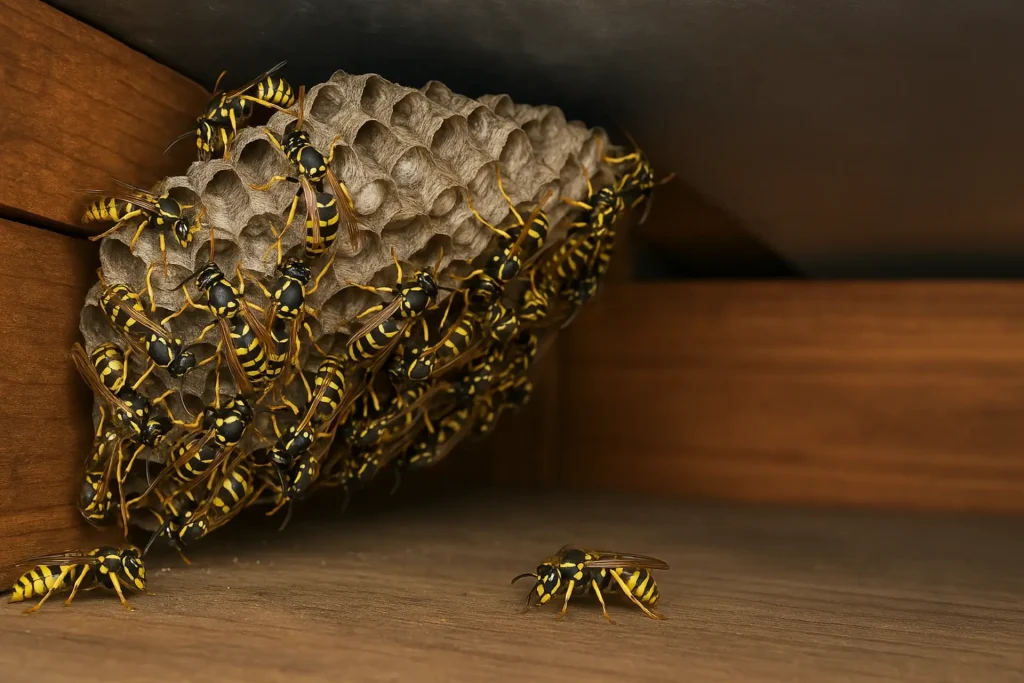
A Papery Grey Nest
Wasp nests are made of chewed wood pulp and look like grey, swirled paper. They start the size of a golf ball in spring and can grow bigger than a football by late summer.
Scratching or Crackling Noises
A crackling or scratching sound in a wall, ceiling or loft can be wasps chewing and building inside a cavity you can’t see.
Wasps Appearing Indoors
Wasps regularly turning up in the same room, around light fittings or windows, can mean a nest in the loft, ceiling void or wall. Our blog on wasp nests in the loft explains what to look for.
Nests in Sheds, Hedges and Bird Boxes
Outbuildings, compost bins, dense hedges, bird boxes and the ground under decking are all common nest sites, especially in rural gardens.
Identifying Wasps and Hornets
Common and German Wasps
The wasps most people see are bright yellow and black, smooth and shiny, with a narrow waist. They build the large paper nests found in lofts, walls and underground.
European Hornets
Hornets are much larger, with brown and yellow markings. They’re generally less aggressive than wasps but can still sting if their nest is disturbed.
Asian Hornets
The Asian hornet is an invasive species with a mostly dark body, a single orange-yellow band on the abdomen and yellow-tipped legs. If you think you’ve seen one, report it through the Asian Hornet Watch app.
Wasps or Bees?
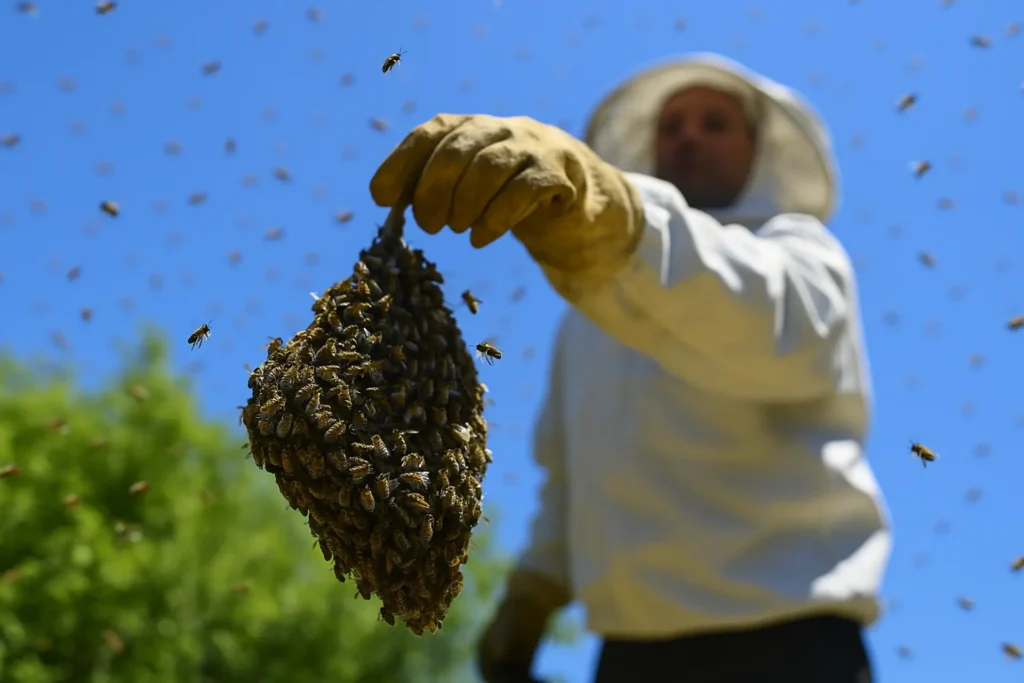
Honey bees are golden-brown and slightly hairy, and bumblebees are round and fuzzy. Bees are vital pollinators and are handled differently, so if you’re not sure, send us a photo. See our bee control service.
Why Wasp Nests Need Professional Removal
Stings and Allergic Reactions
Wasps defend their nest aggressively and can sting more than once. For people who are allergic, a sting can cause a severe reaction that needs emergency treatment.
Nests Keep Growing Through Summer
A nest started by one queen in spring can contain thousands of wasps by August. The sooner it’s dealt with, the fewer wasps there are to deal with.
Hard-to-Reach Nests
Many nests are in roof spaces, wall cavities, chimneys or high under the eaves. Reaching them safely takes the right equipment and training.
Why DIY Often Goes Wrong
Shop-bought sprays often don’t reach the nest itself, and disturbing it can trigger a mass attack. Blocking the entrance while the nest is active can force wasps into the house instead.
How We Deal With Wasp Nests
Step 1: Get in Touch
Call us or use the form on this page. Tell us where the wasps are going in and how high up it is, and send a photo if you can do so safely. If you call, we’ll take the details and send you a follow-up form through our booking system, then talk you through your options and what happens next.
Step 2: Nest Inspection
We locate the nest and its entrance, confirm it’s wasps rather than bees, and check how easy it is to reach. For nests high on roofs, chimneys or fascias, we can use a drone to find the exact spot. Commercial sites get a full professional survey before any treatment plan is agreed.
Step 3: Tailored Wasp Nest Treatment
We treat the nest in the safest way for its location, the property and the people using it, including children and pets. We explain what we’re doing and what to expect afterwards, including how long you may still see wasps around the entrance.
Step 4: Aftercare and Prevention
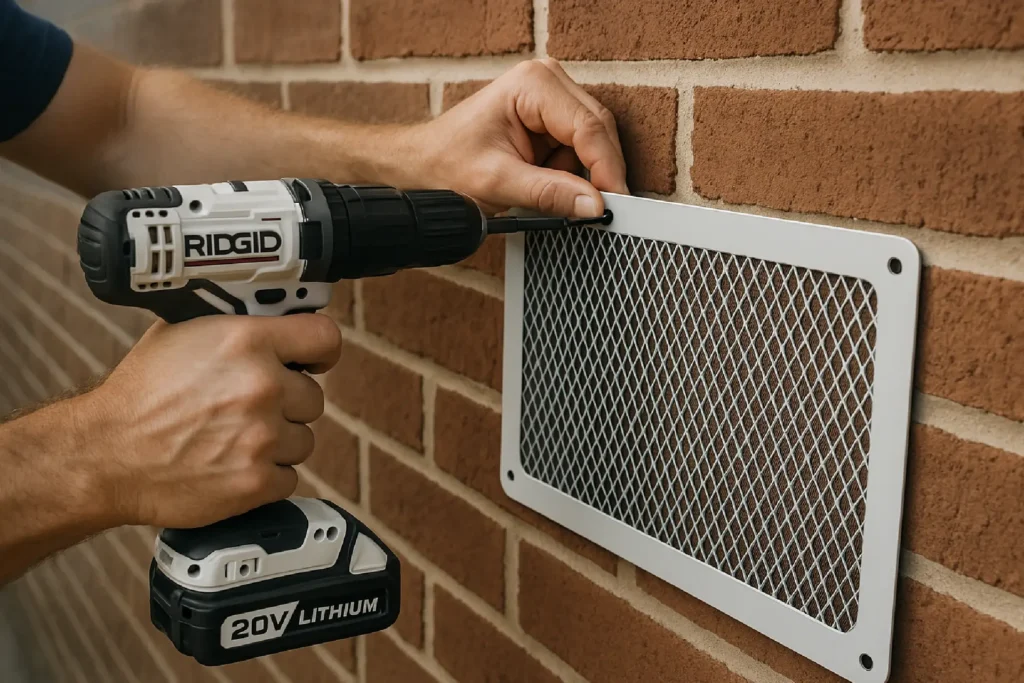
Once the nest has died, it won’t be used again, but new queens may look for a similar spot next spring. We’ll advise on sealing gaps once the season is over, and our proofing service can do this for you.
Step 5: Follow-Up and Ongoing Support
Domestic customers get a follow-up to check everything has been resolved. For pubs, schools, farms and businesses with outdoor areas, we offer seasonal service agreements with regular checks.
What Affects the Cost of Wasp Nest Removal
We price each job once we understand it. The main factors are where the nest is, how high and how easy it is to reach, whether there’s more than one nest, and whether it’s inside a cavity or roof space. Get in touch for a clear quote.
Why Choose Wiltshire Pest Services Ltd for Wasp Nest Removal
Qualified, BPCA-Certified Technicians
Our team has over 30 years of combined experience, including BPCA-certified professionals and a Fellow of the RSPH. Every technician is qualified to at least Level 2.
Trusted by Food Manufacturers and Commercial Sites
High-end food manufacturers rely on us to meet BRC and AIB audit standards. We bring the same care to family gardens, pub terraces and school grounds.
Honest Advice, No Upselling
If it’s a bumblebee nest that will die off on its own in a few weeks, or a wasp nest late in the season that’s causing no problems, we’ll tell you.
Discreet, Unmarked Vehicles
We arrive in unmarked vehicles and keep the job low-key, which matters to pubs, cafés and holiday lets in peak season.
Long-Term Results, Not a Quick Fix
As well as dealing with this year’s nest, we help you make your property less attractive to next year’s queens.
How to Prevent Wasp Nests
Seal Gaps Over Winter
Once nests have died off in late autumn, fill gaps under roof tiles, around fascias and in damaged airbricks before queens start looking for nest sites in spring.
Check Early in Spring
Look in sheds, lofts, bird boxes and under eaves in April and May. A small, early nest is much easier to deal with than a large one in August.
Keep Food and Bins Covered
In late summer, wasps are drawn to sweet food and drinks. Keep bins closed and cover food when eating outside.
Wasp Nest Removal FAQs
Should I remove a wasp nest myself?
It’s not recommended. Disturbing a nest can provoke a mass attack, and many nests are in roof spaces or cavities where DIY products can’t reach. It’s especially risky for anyone allergic to stings.
Will a wasp nest go away on its own?
Eventually. Nests die off naturally in autumn and aren’t reused. But until then, an active nest keeps growing, and the risk of stings grows with it.
How long does it take for a wasp nest to die after treatment?
Activity usually drops off quickly, but you may see wasps around the entrance for a short while as returning wasps come into contact with the treatment. Don’t block the entrance during this time.
Do you need to remove the nest after treatment?
Not usually. Once treated, the nest dies and won’t be used again. We’ll advise if it needs removing, for example if it’s somewhere you use every day.
Do wasps come back to the same nest?
No. Old nests aren’t reused. New queens build new nests each spring, sometimes nearby, which is why sealing gaps over winter helps.
When do wasps build nests?
Queens start nests in spring, usually April or May. Nests grow through summer, are largest in August and September, and die off in autumn.
How much does wasp nest removal cost in the UK?
It depends on where the nest is, how easy it is to reach and whether there’s more than one. We give you a clear quote once we know where it is.
Related Services
- Bee Control: for honey bee swarms and bumblebee nests, which are handled differently.
- Proofing Services: sealing roof and wall gaps to stop next year’s queens getting in.
- Drone Surveys: finding nests high on roofs and chimneys.
Areas We Cover for Wasp Nest Removal
We deal with wasp nests at homes, farms and businesses across Wiltshire and the borders of Somerset, Dorset and Hampshire, including:
Swindon, Bath, Salisbury, Chippenham, Andover, Trowbridge, Devizes, Frome, Warminster, Melksham, Shaftesbury, Calne, Marlborough, Corsham, Westbury, Amesbury.
View all areas we cover