December is the busiest month for many kitchens, and it is also when cockroaches in kitchen areas can spread fastest and do the most damage to a food business.
Longer opening hours, extra deliveries and ovens that barely cool down give cockroaches the warmth, food and cover they need. According to the British Pest Control Association, a German cockroach egg case holds around 30 or more nymphs, and the average gestation period is just 28 days. A few insects in early December can become a noticeable problem by the new year.
This guide is for restaurants, pubs, cafés, caterers and food producers across Wiltshire. It covers how to recognise the two common UK species, the signs to look for, the food safety and inspection risks, and the steps that stop cockroaches coming back. If you already suspect activity, our cockroach control service starts with a full inspection of your premises.
Why Do Cockroaches Become a Bigger Problem in Kitchens in December?
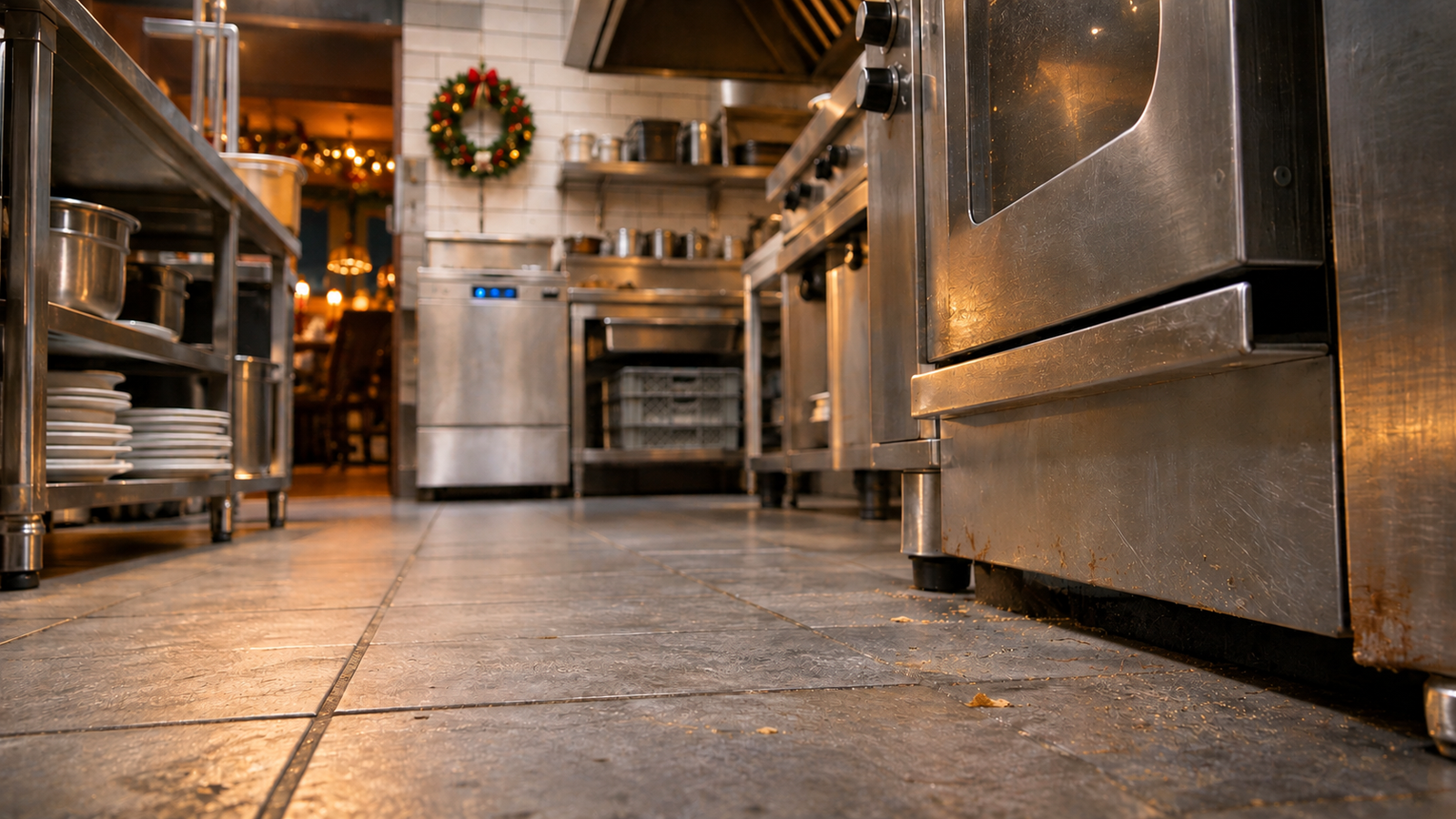
Cockroaches become a bigger problem in December because busy kitchens give them more of the three things they need: warmth, food and places to hide. The BPCA notes that they are often found behind appliances with warm motors, such as ovens and fridges, and around heating ducts and boiler rooms in centrally heated buildings.
The Christmas trade adds pressure in several ways at once. Kitchens run for longer, so there is less time for a full deep clean between services. Stock levels rise, storerooms fill up and boxes sit on the floor for longer than usual.
- More deliveries: extra stock means more cardboard and packaging coming through the back door, and each delivery is a chance for insects or egg cases to arrive.
- Constant heat: ovens, hot cupboards and dishwashers running all day keep the void spaces behind them warm.
- Food debris: crumbs and grease build up under equipment when staff are stretched during service.
- Temporary staff: new team members may not know the cleaning routine or what the early signs of pests look like.
- Holiday closures: a kitchen that shuts for a few days after Christmas leaves cockroaches undisturbed while they feed and breed.
How Do You Identify Cockroaches in a Commercial Kitchen?
You identify cockroaches in a commercial kitchen mainly by size, colour and where you find them. The BPCA names the Oriental cockroach and the German cockroach as the two main species found in the UK, with American and brown-banded cockroaches turning up only occasionally.
German Cockroach
The adult German cockroach is light yellowy brown and 10 to 15mm long. It prefers warm spots, so look behind ovens, fridges, dishwashers and other equipment with warm motors. It breeds quickly, which is why it is the species most likely to build up in a busy kitchen.
Oriental Cockroach
The Oriental cockroach is larger, around 20 to 24mm long, and shiny black, brown or mahogany. The BPCA says it thrives in cool, damp areas such as basements and drains. In a commercial setting it is often linked to cellars, drainage and the lower floors of older buildings.
Both species are nocturnal, so you are unlikely to see them during the day. If staff report seeing cockroaches in daylight or while the lights are on, it often points to a larger population that has run out of hiding space.
What Are the Signs of Cockroaches in a Kitchen?
The main signs of cockroaches in a kitchen are droppings, egg cases, shed skins and, in larger infestations, an unpleasant smell. The Food Standards Agency lists eggs and egg cases, moulted skins, the insects themselves and droppings as the signs to check for in its pest control guidance for caterers.
- Droppings: small dark specks along shelf edges, inside cupboards, on top of door frames and around the back of equipment.
- Egg cases: brown, purse-shaped cases tucked into cracks, under shelving or behind panels. The BPCA says the Oriental cockroach leaves its 13mm egg capsule in dark crevices.
- Shed skins: pale, papery skins left behind as nymphs grow, often found close to where the insects shelter.
- A musty odour: large infestations give off a strong, unpleasant smell that lingers in storerooms and under equipment.
- Damaged packaging: the BPCA lists damage to food or packaging as a sign, so check dry stores and delivery boxes.
- Night-time sightings: insects running for cover when the lights go on at the start of an early shift.
The best time to check is after closing or before opening, with a torch. Focus on the warm voids behind cooking equipment, the areas around sinks and pipework, drains and the bottom shelves of dry stores.
Are Cockroaches in a Kitchen Dangerous to Food Safety?
Yes, cockroaches in a kitchen are a direct food safety risk. The BPCA describes them as vectors of disease, known to carry organisms that cause food poisoning in humans, such as salmonella, staphylococcus and streptococcus.
They spread contamination as they move, because they disgorge partly digested food and drop faeces along the way. That means any surface, utensil or open food they cross can be affected, even if nobody sees the insects themselves.
What the Food Standards Agency Says
The FSA guidance in Safer Food, Better Business says effective pest control is essential to keep pests out of your premises. It tells businesses to check deliveries thoroughly, to call a pest contractor immediately if they see signs of an infestation, and to throw away any food they think has been touched by pests.
It also says surfaces and equipment that pests may have touched should be washed, disinfected and dried to stop harmful bacteria spreading. In a busy December kitchen, that clean-up needs to be planned into the working day rather than left until closing.
Inspections, Audits and Closure
The BPCA notes that Environmental Health Officers can issue enforcement notices to businesses that do not have adequate pest management. Plymouth City Council's guidance for food businesses explains that the Food Safety and Hygiene Regulations 2013 require food premises to be closed when an imminent health hazard is identified, including pest activity such as cockroaches that cannot be corrected straight away.
For manufacturers and suppliers working to third-party standards, cockroach activity can also be raised during an audit. Losing trading days in the busiest weeks of the year is a cost most businesses want to avoid, which is why early action matters.
Steps to Get Rid of Cockroaches in a Kitchen Permanently
Getting rid of cockroaches in a kitchen permanently depends on removing what they need to survive and treating the places they hide. Plymouth City Council points out that cockroaches are difficult to remove completely and are likely to return as long as they have what they need available.
- Inspect thoroughly: find where the cockroaches are sheltering, which species is present and how far the activity has spread.
- Deep clean the harbourage areas: pull out equipment where you safely can and remove grease and food debris from behind and underneath it.
- Remove food and water sources: store food in sealed containers, fix dripping taps and leave no food or dirty plates out when the kitchen is closed.
- Seal gaps and voids: fill cracks around pipework, skirting and wall panels so cockroaches have fewer places to hide and breed.
- Check every delivery: the FSA advises against accepting a delivery that shows signs of pests, and cardboard should be broken down and removed quickly.
- Use professional treatment: a trained technician can treat the areas where cockroaches hide without putting food or food contact surfaces at risk.
- Follow up and keep records: repeat inspections show whether the treatment has worked and give you evidence of pest management for inspectors and auditors.
Shop-bought sprays rarely solve the problem on their own. They kill the insects you can see but do not reach egg cases hidden in voids, and the FSA warns that pest control chemicals, including sprays, must never come into contact with food.
How We Deal With Cockroaches in Commercial Kitchens
At Wiltshire Pest Services Ltd we treat cockroach problems in kitchens as a food safety issue first. We are BPCA-certified, and food manufacturers trust us to help them meet BRC and AIB audit standards.
- Inspection first: every visit starts with an inspection, so we know the species, the hiding places and the likely route in before any treatment.
- Qualified technicians: every technician is qualified to at least Level 2, and our team has over 30 years of combined experience, including a Fellow of the RSPH.
- Discreet visits: we use unmarked vehicles, so customers arriving for a Christmas meal will not see a pest control van outside.
- Proofing: our proofing service seals the gaps and entry points that let cockroaches spread between rooms and buildings.
- Disinfection: after an infestation, our disinfection services help you clean affected areas properly before full service resumes.
- Service agreements: commercial service agreements give you regular inspections and a clear record of pest management throughout the year.
- Honest advice: we tell you what the problem needs and nothing more, with no upselling.
We work with food businesses across Wiltshire and the borders of Somerset, Dorset and Hampshire, from city centre restaurants covered by our Salisbury pest control team to food producers on industrial estates around Swindon. For a wider look at the rules that apply to your premises, read our guide to commercial pest control for food and drink businesses. Acting on the first signs in late November or early December gives you the best chance of trading through Christmas without interruption.
Get Help From Wiltshire Pest Services Ltd
If you have spotted signs of cockroaches in your kitchen, call us on 07711 259749 or use the enquiry form on this page. We will arrange an inspection and give you clear, honest advice on the next steps.
FAQs
Do cockroaches bite people?
The BPCA says it is incredibly rare for cockroaches to bite humans. The real risk in a kitchen is the bacteria they spread onto food and surfaces.
Why do I only see cockroaches at night?
Cockroaches are nocturnal, so they hide during the day and come out to feed when the kitchen is dark and quiet. Seeing them in daylight can be a sign of a larger infestation.
Can cockroaches come in with deliveries?
Yes, insects and egg cases can arrive in boxes, crates and packaging. The FSA advises checking deliveries thoroughly and refusing any that show signs of pests.
Where do cockroaches hide in a kitchen?
They shelter in warm, dark places such as behind ovens and fridges, around pipes and sinks, under shelving and inside wall voids. Oriental cockroaches also favour cool, damp areas such as drains and cellars.
Should I stop serving food if I find cockroaches?
The FSA says to call a pest contractor immediately and throw away any food you think pests have touched. Plymouth City Council's guidance notes that a business can also choose to close voluntarily while the problem is dealt with.