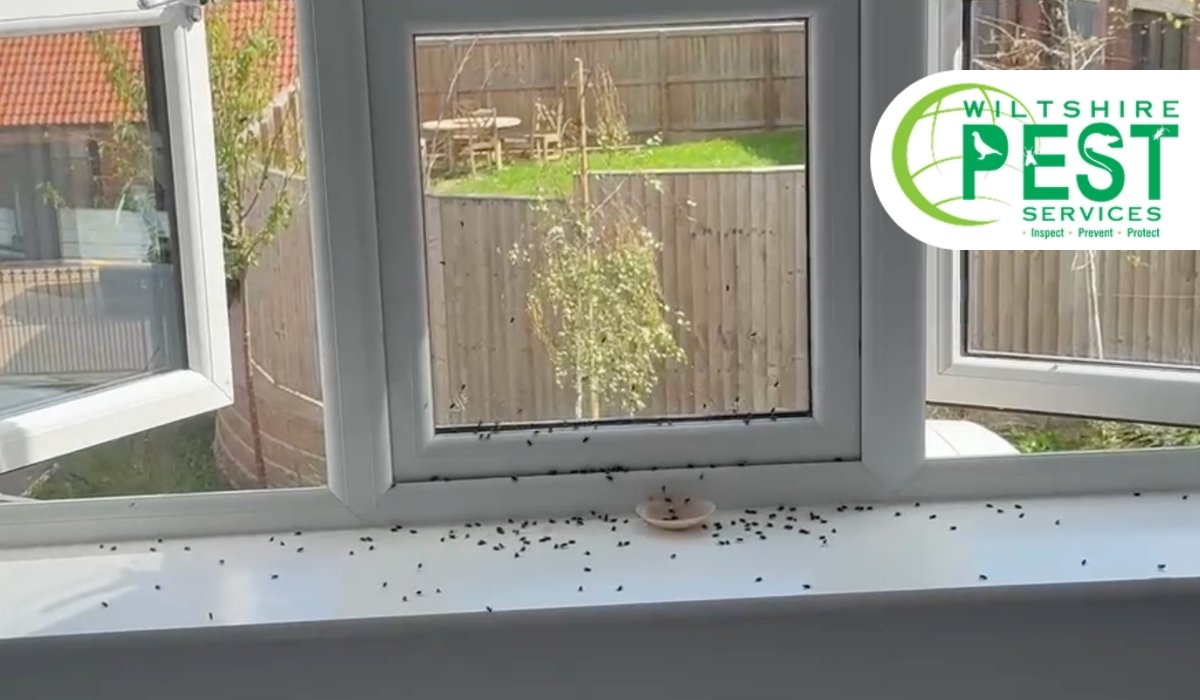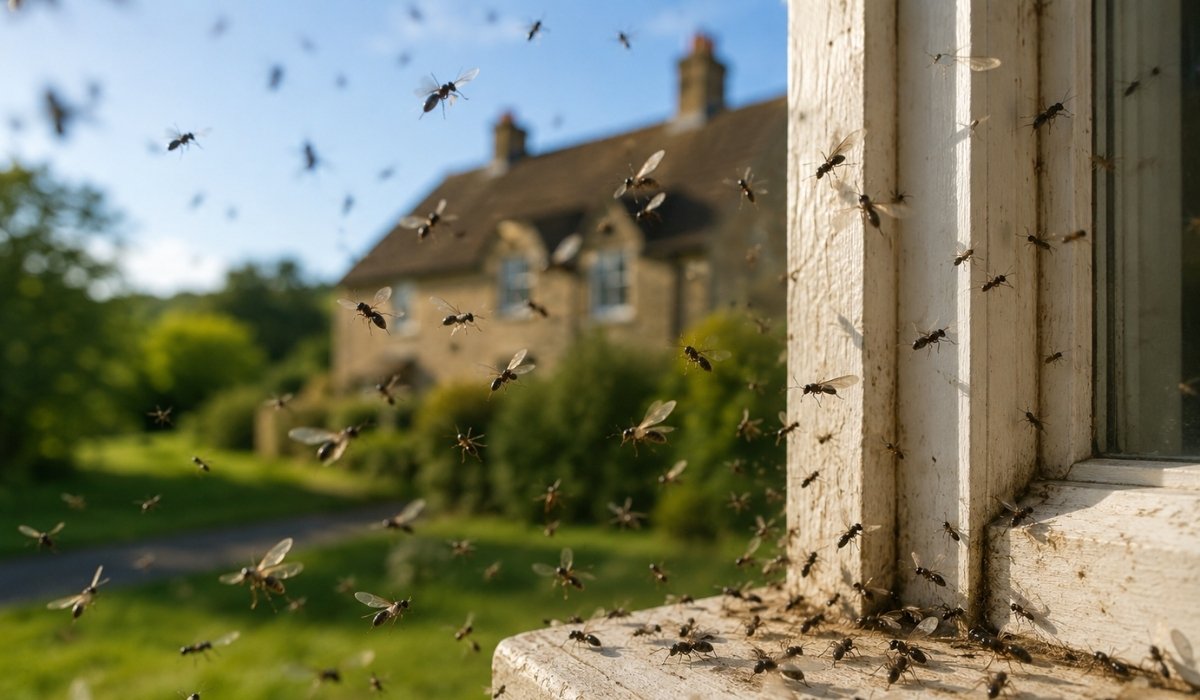
A flea infestation in the house rarely starts with a flea you can see. It starts with a few itchy...
Read More >>
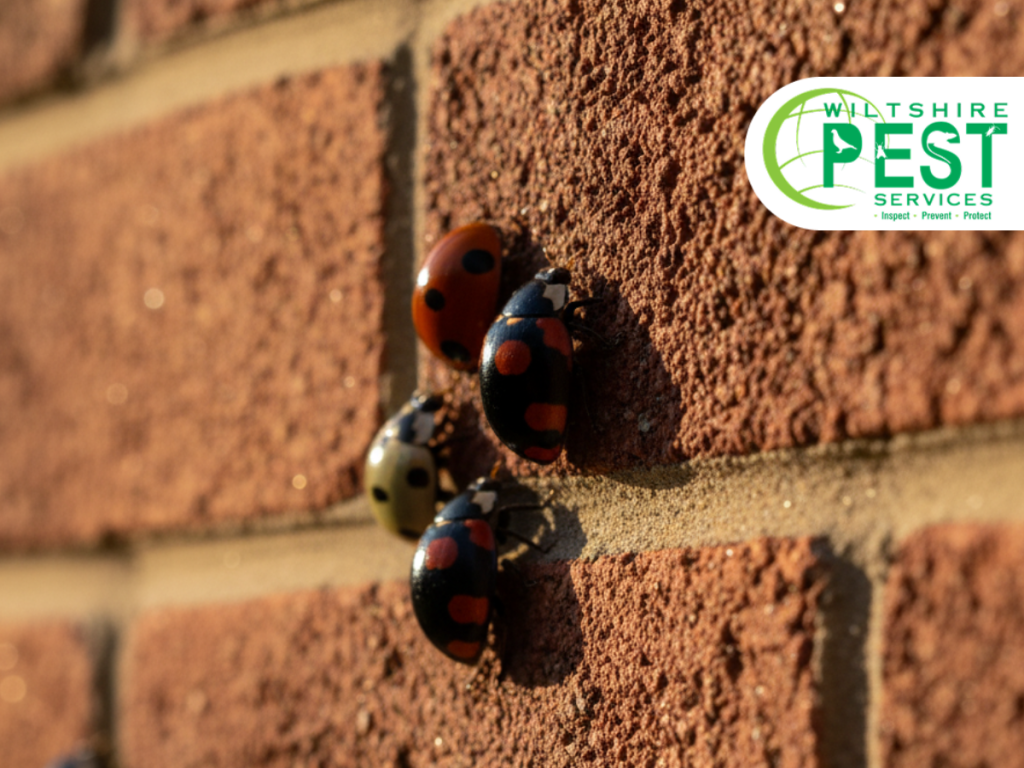
As the weather turns cooler this autumn, many Wiltshire homeowners are waking up to clusters of red, orange or black beetles creeping across window frames, roof soffits and loft spaces. What might begin as a few dots soon becomes a full-blown harlequin ladybird infestation.
And this isn’t just a local issue – since their arrival in the early 2000s, scientists have recorded over 48,510 verified occurrences of harlequin ladybirds across Britain and Ireland, confirming how widespread this invasive species has become. During their rapid expansion, harlequin ladybirds were found to spread at an astonishing 105 kilometres per year, making them one of the fastest insect invasions in UK history.
That kind of growth helps explain why, come autumn, so many households in Wiltshire suddenly find themselves sharing space with these uninvited guests.
The harlequin ladybird (Harmonia axyridis) was originally introduced to Europe from Asia in the early 2000s to help control aphids. Unfortunately, it quickly spread beyond gardens and farmland – and is now one of the most invasive insect species in the UK.
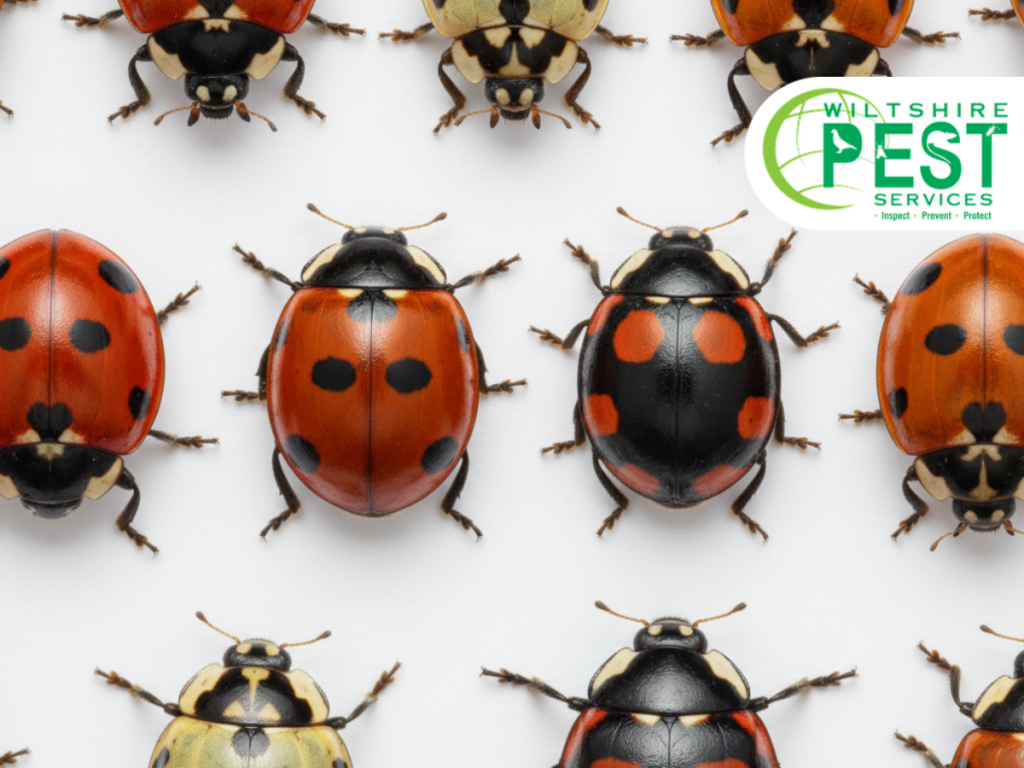
Unlike our native seven-spot ladybirds, harlequins come in many different colours and patterns – red, orange, yellow or even black, with anything from 0 to 20 spots. Their legs are usually darker, and their underside tends to be orange-brown rather than pale.
While they’re great at eating aphids outdoors, the problem comes when they look for somewhere to hibernate during the colder months… and your cosy home becomes the perfect spot.
Every autumn, usually between late September and November, harlequin ladybirds start searching for warm, dry places to spend the winter. They follow the sun – literally! South-facing walls, window frames and roof spaces are especially attractive.
Once a few ladybirds find a suitable site, they release a chemical pheromone that signals to others nearby: “This is a good spot!” That’s why you often see them gathering in large groups – hundreds at a time – around the same windows or walls year after year.
Warmer autumns caused by climate change have also contributed to larger ladybird populations. Milder temperatures allow them to breed for longer, meaning more insects looking for shelter when the cold sets in.
It’s easy to miss the first few, but here are the tell-tale signs:
If you take a closer look and notice variation in colour and spot patterns, dark legs, or an orange underside – that’s a strong sign you’re dealing with harlequin ladybirds, not native ones.
Harlequin ladybirds don’t cause major health risks or structural damage, but they can be annoying and unhygienic indoors. When disturbed, they release a yellowish fluid that smells bad and can stain fabrics or walls.
In rare cases, they may also bite, which feels like a tiny nip. It’s not harmful, but it can cause mild irritation for some people.
The bigger issue is environmental: these invasive ladybirds outcompete native species, eating their food sources and even their larvae. So, getting them under control isn’t just about keeping your home clean – it also helps protect local biodiversity.
You might see tips online suggesting using citrus sprays, candles or essential oils to repel ladybirds. While these can sometimes deter a few individuals, they won’t solve a full infestation.
Squashing them is also a bad idea – it triggers their reflex bleeding, which leaves stains and can attract more ladybirds due to pheromone residue.
Vacuuming can help reduce numbers temporarily, but if they’re hiding in wall voids, roof spaces or behind cladding, you’re unlikely to reach them all.
For lasting results, professional pest control treatment is the safest and most effective solution.
Once the current infestation is under control, you can take simple steps to reduce the chances of another swarm next year:
By taking action before winter, you can stop the next wave of ladybirds from settling in.
At Wiltshire Pest Services Ltd, we’ve helped countless homeowners across the county deal with seasonal insect invasions – including harlequin ladybirds.
Here’s how our process works:
Our treatments are safe for families and pets, and we always take a discreet, environmentally responsible approach.
Harlequin ladybirds enter homes during autumn to find warm, dry places to hibernate for the winter. They’re drawn to south-facing walls, windows, and roof spaces that stay warm throughout the day. Once a few ladybirds find a good spot, they release a pheromone that attracts hundreds more – which is why they often return to the same place year after year.
Not really. Harlequin ladybirds don’t spread diseases or cause structural damage, but they can be a nuisance. When disturbed, they release a yellow fluid that stains walls and fabrics and gives off a strong odour. In rare cases, they may bite, but it’s more like a small nip than a serious sting. The biggest problem is the mess and smell – and how quickly their numbers can grow.
Prevention starts with proofing and sealing. Check your windows, vents, and rooflines for tiny gaps – these insects can squeeze through the smallest cracks. Cleaning affected areas with mild detergent or vinegar helps remove pheromone traces that attract others. For a long-term solution, schedule a professional ladybird control service each autumn before the swarm season begins.
You can try vacuuming small numbers or using natural repellents like citrus sprays, but once you have a large infestation, DIY methods rarely work. The insects hide deep in wall cavities, loft insulation, and behind cladding. A professional pest control team like Wiltshire Pest Services Ltd. uses safe, targeted treatments that remove them completely and prevent future infestations. Learn more here: Harlequin Ladybird Control in Wiltshire
If you’re finding dozens or more ladybirds indoors, especially clustering around windows, lofts or lights, it’s best to call a professional. Acting early in autumn gives the best results before they settle in to hibernate.
At Wiltshire Pest Services Ltd., we provide fast, discreet, and environmentally friendly ladybird infestation treatments throughout Wiltshire – keeping your home pest-free before winter sets in.
– SEASONAL TIPS & NEWS –
Flea Infestation in the House: Why It Keeps Coming Back and How to Break the Cycle
A flea infestation in the house rarely starts with a flea you can see. It starts with a few itchy...
Read More >>If flies are gathering on your upstairs windows in autumn, or turning up in the loft on a sunny winter...
Read More >>Flying Ant Day in Wiltshire: What It Is and Why It Happens Every August
If you have stepped outside in Warminster, Trowbridge, or Chippenham on a warm August afternoon and found the air suddenly...
Read More >>Wiltshire Pest Services Ltd provides professional pest control for homes and businesses across Wiltshire and into Somerset, Dorset and Hampshire, covering the SN, BA and SP postcode areas. Whether it’s rodents, insects, birds or proofing work, we offer a fast, reliable and discreet service. Not sure if we cover your area? Call us on 07711 259749 and we’ll let you know.
– TOWNS WE SERVE –
🐭 We Keep Digital Pests Under Control Too!
We use cookies (the good kind) to make your visit smoother, help us understand how our site is used, and improve your experience. By clicking "Accept All", you're allowing us to trap these digital critters responsibly.
Websites store cookies to enhance functionality and personalise your experience. You can manage your preferences, but blocking some cookies may impact site performance and services.
Essential cookies enable basic functions and are necessary for the proper function of the website.
These cookies are needed for adding comments on this website.
Google Analytics is a powerful tool that tracks and analyzes website traffic for informed marketing decisions.
Statistics cookies collect information anonymously. This information helps us understand how visitors use our website.