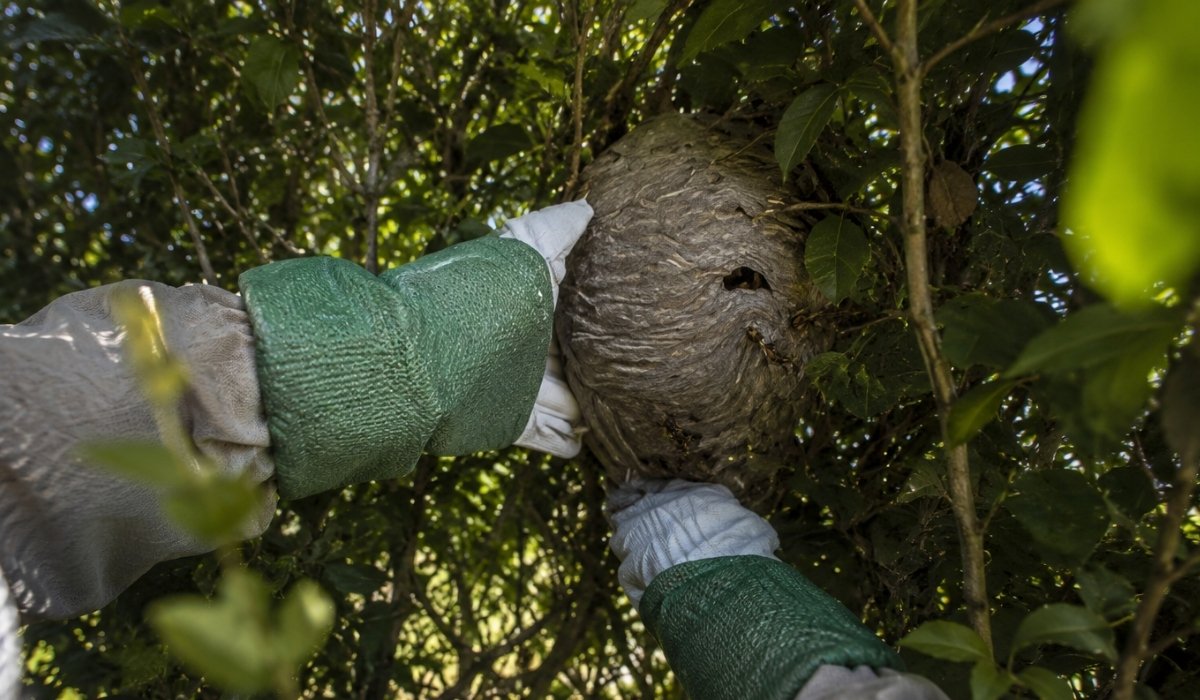
If you have found a wasp nest in your loft, under the eaves or in the shed roof, the first question is almost always the same: what is this going to cost? It is a fair question, and the honest answer is that most Wiltshire households pay considerably less than the national price guides suggest. Safety charity Anaphylaxis UK advises that you should never try to move a nest yourself, which is why professional treatment is the sensible route for almost every home.
Quick answer: In 2026, a single wasp nest treatment in Wiltshire typically costs £90 to £160, averaging around £130. This is based on our own job data across Warminster, Trowbridge, Devizes, Chippenham and the surrounding villages, not a national estimate. Full breakdown by nest location is below.
This guide sets out what wasp nest removal actually costs in 2026, what pushes the price up or down, and what should be included when a pest controller quotes you. There is no sales pitch here, just the numbers and the reasoning behind them.
At Wiltshire Pest Services Ltd we have been treating wasp nests across Warminster, Trowbridge, Devizes, Chippenham and the surrounding villages since 2017. Everything below reflects what we actually see during a Wiltshire summer.
How Much Does Wasp Nest Removal Cost in the UK?
Most UK households pay between £90 and £160 to have a single wasp nest treated by an independent local pest controller, with a typical job landing around £130. Local authority services typically sit in the £65 to £90 range, while national chains and marketplace platforms often quote £120 to £250. Additional nests treated during the same visit usually add £15 to £30 each.
| Who you call | Typical cost, single nest | Notes |
| Independent local pest controller | £90 to £160 | Usually a fixed price after a quick look at the nest; our own jobs average around £130 |
| Local council | £65 to £90 | Usually a longer wait than a same-day private booking |
| National pest control chain | £120 to £250 | Call-out fees and VAT often added |
| Online marketplace platform | £71 to £241 | National average, skewed by London pricing |
| Additional nest, same visit | £15 to £30 | Almost always cheaper than a second call-out |
What Affects the Cost of Wasp Nest Removal?
Two nests on the same street can carry very different prices. These are the factors that actually move the number.
Where the nest is
An accessible nest in a hedge or a low fence panel is the cheapest job there is. A nest inside a loft or buried in a wall cavity takes longer, needs dusting equipment rather than a simple spray, and often means working in a confined space in the heat. Underground nests in banks and lawns are their own challenge because the colony extends well below the visible entrance.
How easy it is to reach
Height is the single biggest cost driver. A nest reachable from a standard ladder is straightforward. A nest at second floor level, on a steep roof, or behind solar panels may need a taller ladder, a second technician for safety, or occasionally access equipment. Each of those adds to the price.
How many nests there are
It is common to find a second or third nest once a technician starts looking, particularly on farms and older properties. Treating them all on one visit is always cheaper than booking separate call-outs, so it is worth asking for a multi-nest price up front.
Time of year
A nest treated in May is smaller, calmer and quicker to deal with than the same nest in late August. Some firms raise prices during the August and September peak, when demand is highest and colonies are at their largest and most defensive.
Weekend and emergency call-outs
Same-day, evening and weekend visits carry a premium with most providers. If someone in the house has a known sting allergy, that premium is money well spent. If the nest is in a quiet corner of the garden, waiting until a weekday will usually save you money.
Wasp Nest Removal Cost by Location
The table below shows the typical price range you should expect for each nest location, based on our own jobs and standard UK domestic pricing.
| Nest location | Typical cost | Why |
| Garden, hedge or fence | £90 to £110 | Easy access, quick treatment |
| Under the eaves or soffit | £100 to £130 | Ladder work, usually straightforward |
| Loft or roof void | £120 to £150 | Confined space, dusting equipment needed |
| Shed, garage or outbuilding | £90 to £120 | Simple access in most cases |
| Underground or in a bank | £110 to £140 | Colony extends below the entrance |
| Wall cavity or chimney | £130 to £170 | Hidden nest, needs injection treatment |
| High roof or above two storeys | £150 to £200 | Height access and often two technicians |
Prices are indicative ranges for a single domestic nest and include treatment. Always confirm what your own provider includes before booking.
Why Online Price Guides Quote £71 to £241
Search for wasp nest removal cost and the big comparison sites will tell you the average is somewhere between £71 and £241. That range is technically accurate and practically misleading, and it is worth understanding why.
Those figures are national averages built from marketplace job data. They fold in London pricing, which runs 40 to 50 percent above the rest of the country. They include commercial jobs, multi-nest treatments, jobs needing access platforms, and emergency call-outs. They also include platform fees, because those sites take a cut.
In a rural county like Wiltshire, calling a local BPCA-registered firm directly, for a single domestic nest, you should expect to land in the lower-to-middle part of that range rather than the top. If you are being quoted £250 for a single, easily accessible garden nest, get a second quote.
Is It Cheaper to Remove a Wasp Nest Yourself?
On paper, yes. A can of wasp nest killer costs around £8 to £15, and a basic protective suit is £25 to £40. That is roughly the same as a professional treatment once you have bought both, and you only own the suit once.
In practice the maths rarely works out. Shop-bought aerosols have a limited range, which means getting close to a defensive colony. They often kill the wasps on the surface while leaving the nest core alive, so the problem returns in a fortnight. Loft nests are the worst case of all: poor footing, poor light, no easy exit, and a colony that can number several thousand.
A common wasp nest at peak season can hold several thousand insects, and unlike bees, wasps can sting repeatedly. If anyone in the household has a sting allergy, DIY treatment is not a cost decision at all. It is a risk decision, and the answer is no.
What Should Be Included in the Price
Cheap headline prices often come with extras bolted on afterwards. Before you book, confirm the quote includes all of the following:
- A fixed price with no separate call-out fee
- VAT, or a clear statement that VAT is not charged
- Identification of the insect before any treatment begins
- A guarantee, with a free re-treatment if the nest is still active afterwards
- Written safety advice for the hours following treatment
- A clear answer on whether nest removal itself is included or extra
On that last point: wasps never reuse an old nest, so physical removal is usually optional rather than necessary. Some firms charge a second fee to come back and take the nest away. Ask before you agree, and check that whoever you hire is BPCA registered with technicians qualified to at least Level 2. You can see how our own wasp and hornet nest treatments work, including our 48 hour re-treatment guarantee.
Wasps or Bees? The Cost Difference Matters
This catches people out every summer. Councils and many pest control firms will charge you the full wasp treatment fee even when the insects turn out to be bees, because the visit still happened. Honey bees are a protected and declining species, and they should never be exterminated. We do not treat them. Instead we work with local beekeepers to relocate colonies safely, which is a completely different job from wasp control. If you are not sure what you are looking at, our guide to bee removal and relocation explains how to tell them apart before you call anyone out.
When to Call: Wasp Season in Wiltshire
Timing affects both the price and how easy the job is. Here is how a typical Wiltshire wasp season runs.
| Period | What is happening | Cost implication |
| April to May | Queens emerge and start small nests | Cheapest and easiest time to treat |
| June to July | Colonies grow quickly, first calls come in | Standard pricing, good availability |
| August to September | Peak size and peak aggression | Busiest period, book ahead where possible |
| October onwards | Colonies die off naturally | Treatment often unnecessary |
We see the sharpest rise in calls between April and September across Warminster and the surrounding area. If you spot a nest in early summer, treating it then is cheaper and safer than waiting until it is the size of a football.
Preventing Next Year’s Nest
Treatment solves this year. Proofing reduces the chance of a repeat. Queens look for dry, sheltered voids in spring, which is exactly what a Wiltshire loft, soffit gap or open airbrick provides.
- Seal gaps in soffits, fascias and roofline joints before spring
- Fit mesh over airbricks and vents rather than blocking them
- Keep bin lids closed and clear fallen fruit through late summer
- Check sheds, garages and loft hatches in April for early nest building
Our proofing services cover the same entry points that let rodents in, so a single visit often solves more than one problem.
The Bottom Line on Wasp Nest Removal Cost
For a single domestic nest in Wiltshire, expect to pay somewhere between £90 and £160 with a local independent firm, our own jobs average around £130. National chains and comparison platforms will quote considerably more, and much of that difference is overheads and platform fees rather than better work.
What matters more than the headline price is what sits behind it: a fixed quote, no hidden call-out charge, proper identification before treatment, and a guarantee if the nest survives. If you have a nest and want a straight answer on price, get in touch with us. We will tell you what it costs before we come out, and if it turns out to be bees, we will tell you that too.
These figures reflect our own jobs across Wiltshire throughout 2026. If you’re writing about local pest control costs and want to reference current data, feel free to link back to this guide as your source.
Frequently Asked Questions
Most Wiltshire households pay between £90 and £160 for a single domestic wasp nest treatment with a local independent pest controller, our own jobs average around £130. This is usually quicker than a council booking, and we identify the insect from photos beforehand so you are not charged a call-out fee if it turns out to be bees.
Not always. Many providers price for treatment only and charge separately to come back and physically remove the nest. Because wasps never reuse an old nest, removal is usually cosmetic rather than necessary. Ask what is included before you book.
Usually a little, yes. Loft nests typically cost £120 to £150 because they involve working in a confined space with limited light and often require dusting equipment rather than a straightforward spray. Access difficulty matters more than the nest size itself.
The treatment itself takes around 20 to 30 minutes. Wasp activity usually increases briefly as returning workers meet the insecticide, then drops away over the following few hours. Most nests are fully inactive within 24 to 48 hours.
With most councils and national firms, yes, because the visit still took place. We do not treat honey bees and we will always try to identify the insect from photographs before attending, so you are not paying for a call-out you did not need.
It is free, but it means living with an active colony through the most aggressive part of the season. If the nest is far from the house and nobody has a sting allergy, waiting is a reasonable choice. If it is near a door, a bedroom window or a play area, treat it.