A flea infestation in the house rarely starts with a flea you can see. It starts with a few itchy bites around the ankles, a dog that won’t stop scratching, or a cat that is suddenly grooming far more than usual. By the time you spot a flea jumping off the carpet, most of the problem is already in the floor. Wiltshire Pest Services Ltd treats flea infestations in homes, rentals and holiday lets across Amesbury and the rest of Wiltshire. If you have already treated the pet and sprayed the carpets and the fleas are still here, this guide explains why, and what actually breaks the cycle.
Why flea problems show up indoors in autumn
Fleas are usually thought of as a summer pest, but autumn is when many households first notice them inside. Pets pick up fleas outdoors through the warmer months, and the eggs drop off around the house. Once the heating goes on, carpets, sofas and pet beds stay warm enough for those eggs to keep developing, and pets spend more time indoors on the furniture.
In a centrally heated home, fleas don’t stop for winter. The life cycle carries on all year, which is why a problem that started in August can be at its worst in October or November.
Most of a flea infestation is in the floor, not on the pet
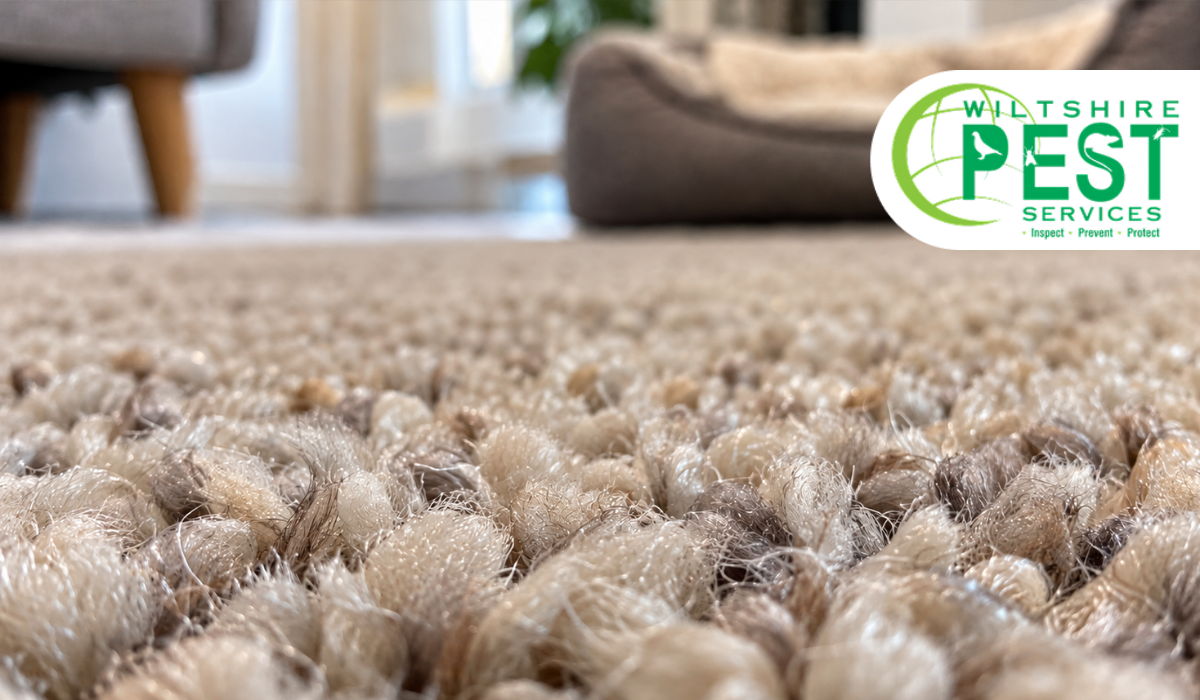
Adult fleas on your pet make up only around 5% of a typical flea population. The other 95% is eggs, larvae and cocoons spread through carpets, floorboards, sofas and bedding. That is the part most DIY treatments never reach.
| Stage | Where it is | Why it matters |
| Eggs | Fall off the pet onto carpets, rugs, sofas and bedding | A female flea can lay up to 50 eggs a day |
| Larvae | Deep in carpet fibres, gaps between floorboards, under furniture | They move away from light, so surface sprays often miss them |
| Cocoons (pupae) | The same hidden places, stuck to fibres | Protected from most treatments and can stay dormant for months |
| Adult fleas | On pets, or jumping from carpets | The only stage most people ever see |
Why the cocoon stage causes most of the trouble
Inside its cocoon, a developing flea is protected from most insecticides. It can sit there for weeks or months, and some veterinary sources say up to a year, until warmth and movement nearby tell it a host is close. Then it hatches and jumps. This is the stage that keeps an infestation going after everything else has been treated.
Why fleas keep coming back after DIY treatment
Only the pet was treated, or only the house
Treating the pet stops new eggs being laid, but it does nothing for the thousands already in the carpet. Treating the house without the pet means every new egg lands straight back on the floor. Pets and the home need treating at the same time, and every cat and dog in the house needs to be included.
Flea bombs and sprays don’t reach where the larvae are
A flea bomb settles on open floor. Larvae and cocoons are under beds and sofas, along skirting boards, inside upholstery and down between floorboards. Those are exactly the places a fogger misses. Our guide to DIY vs professional pest control covers where shop-bought products work and where they don’t.
Vacuuming stopped too early
Daily vacuuming does two jobs. It removes eggs and larvae, and the vibration encourages cocoons to hatch, so the new fleas come out while a treatment is still working. Stop vacuuming after a few days and the remaining cocoons simply wait.
The two-week rebound
In warm conditions, a flea can go from egg to adult in around two weeks. So a house that seems clear a few days after a spray can be full of fleas again a fortnight later. It looks like the treatment failed. In fact the next generation was already in the carpet when you sprayed.
Flea infestations in Amesbury homes, rentals and holiday lets
Two situations around Amesbury tend to catch people out, because neither of them involves your own pet.
Moving into a house that has been empty
If the previous occupants had a cat or dog, cocoons can sit in the carpets long after they have gone. When you move in, the footsteps and warmth trigger them to hatch, and the bites start within days, even if you have no pets at all. This is one of the most common reasons people find fleas in a rental or a newly bought home.
Holiday lets and guest accommodation
Amesbury has plenty of holiday lets and guest rooms for visitors to Stonehenge and Salisbury Plain. If a property accepts dogs, one visiting pet with fleas can leave eggs behind. The property may then sit empty between bookings, and the next guests arrive to bites. A changeover clean helps, but a standard clean doesn’t break the flea life cycle. Our Amesbury pest control page covers how we work with holiday lets and guest accommodation, including discreet visits between bookings.
What to do in the first 48 hours
- Treat every cat and dog in the house with a vet-recommended flea product, all at the same time.
- Vacuum every day: carpets, rugs, sofas, along skirting boards, under furniture and wherever pets sleep. Empty the vacuum outside straight away into a sealed bag.
- Wash pet bedding, throws and your own bedding on a hot wash.
- Keep pets out of bedrooms until the problem is under control.
- Don’t throw out carpets or furniture. It is almost never necessary.
- Check the bites. Flea bites are usually around the ankles and lower legs. Bites on the arms, neck and shoulders after a night in bed point more towards bed bugs, and an itchy rash with no bites can be caused by carpet beetle larvae.
- If you have no pets, look for another source: a bird’s nest in the eaves or wildlife in the loft can bring fleas into the house.
If the bites carry on after a week of this, or the fleas came back after a treatment you have already done, it is time to call a professional.
What a professional flea treatment involves
A proper flea treatment deals with the house, the pets and the life cycle together. Every job is a little different, but this is what to expect. For a general overview, see what to expect during a pest control visit.
Inspection first
We confirm it is fleas and find where they are concentrated, usually pet beds, the rooms pets use most, sofas and bedrooms. If there are no pets, we look for the source, such as old bird nests or squirrels in the roof space.
Preparing the house
Before treatment, you clear the floors as far as you can, vacuum thoroughly and wash bedding. Pets should be treated by your vet at the same time. We tell you which rooms will be treated and how long people and pets need to stay out.
Treating the hidden stages
The treatment reaches the places household sprays miss: carpet edges, under beds and furniture, soft furnishings, pet areas and gaps in floorboards. That is where the eggs, larvae and cocoons are.
The weeks after
You may still see a few fleas for a while as the last cocoons hatch. That is normal, and newly hatched fleas die once they cross treated surfaces. Keep vacuuming every day, and check with us before shampooing or steam cleaning carpets. Domestic customers get a follow-up to make sure the problem is resolved.
What affects the cost of treating a flea infestation
We price each job once we understand it. The main factors are:
- The number of rooms affected and the size of the property
- How established the infestation is
- How many visits are needed
- Whether the source is wildlife that also needs dealing with, for example through proofing
- Whether it is a home, a rental between tenants or a holiday let between guests
More detail on how we work is on our flea control page.
Get help with fleas in Amesbury
If the fleas are back after you have already treated, or the bites started as soon as you moved in, call Wiltshire Pest Services Ltd on 07711 259749 or use the form on this page. We cover Amesbury and the surrounding villages, and the rest of Wiltshire.
Frequently asked questions
How long does a flea infestation in the house last?
Without treatment, it keeps going for as long as there is a pet or person to feed on. Even in an empty house, flea cocoons can wait for months and hatch when someone moves back in. A full treatment of the pets and the house together, followed by regular vacuuming, is what brings it to an end.
Do fleas die off in winter?
Not indoors. Outside, cold weather slows fleas down, but a centrally heated home keeps carpets and soft furnishings warm enough for the life cycle to carry on all year. That is why many households first notice fleas in autumn, once the heating goes on.
Do flea bombs and foggers work?
They kill some adult fleas, but the spray settles on open floor and misses the places larvae and cocoons hide, such as under furniture, along skirting boards and deep in carpet. That is why fleas often return a couple of weeks after a flea bomb.
How long can flea cocoons stay dormant?
Weeks or months, and some veterinary sources say up to a year. The cocoon protects the developing flea until warmth and movement nearby tell it a host is close, which is why fleas can appear in a house that has been empty for a long time.
Should I steam clean or shampoo carpets for fleas?
Vacuuming thoroughly before a treatment helps. After a professional treatment, check with us before steam cleaning or shampooing carpets, as it can remove the treatment from the places it needs to keep working. Keep vacuuming every day instead.