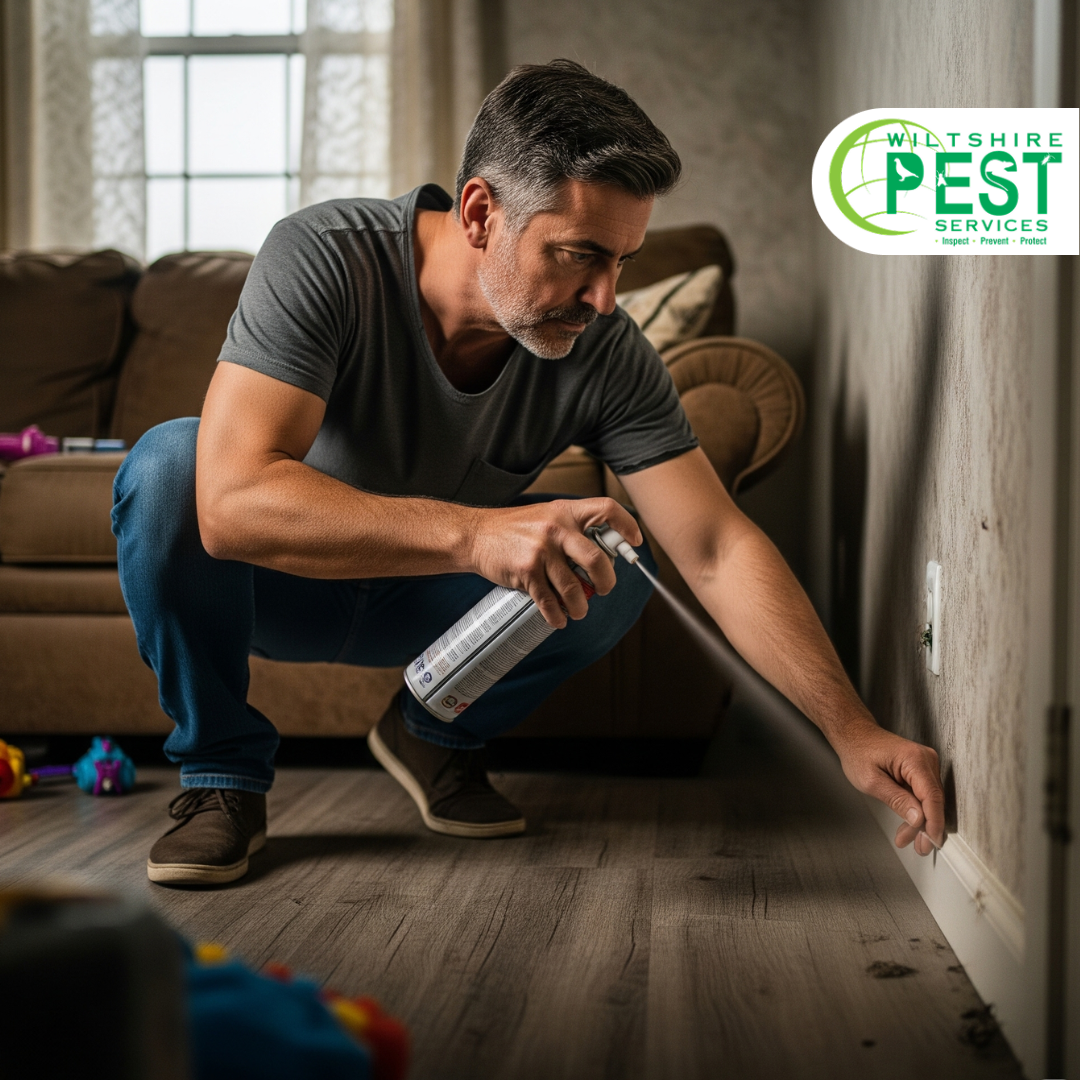
When you spot a mouse in the kitchen or ants on the worktop, the first instinct is usually to sort it yourself. A trip to the hardware shop is cheaper than a call-out, and for some small problems it works. For others, DIY pest control wastes time and money while the problem grows.
This guide explains which pests you can safely tackle yourself, which ones need a professional, and the UK rules that now limit what homeowners can use.
What DIY Pest Control Usually Involves
Most homeowners start with one or more of these:
- Snap traps and electronic traps for mice and rats
- Shop-bought baits and bait stations for rodents and ants
- Insect sprays and powders for ants, flies and fleas
- Foggers or “bug bombs” for fleas and flying insects
- Natural repellents such as peppermint oil or vinegar
- Proofing such as sealing gaps and fitting fly screens
These can help with small, visible problems. Where they often fall short is with hidden nests, larger infestations and pests that keep coming back.
What Homeowners Can No Longer Use
The rules on DIY pest control have tightened in recent years, and many older guides are out of date.
Glue Traps Are Banned for Public Use in England
Since 31 July 2024, it has been illegal for members of the public in England to use glue traps to catch rodents. Only licensed professional pest controllers can use them, and only in exceptional circumstances where other methods have failed.
Stronger Rat Poisons Are Professional-Only
Since 1 January 2026, the stronger professional rodenticides can only be bought by trained, certified users. Products sold to the public are weaker and sold in smaller amounts, which is one reason DIY baiting often fails against rats.
Some Animals Are Protected
Active nests of most wild birds are protected by law, so they can’t be removed while in use. Bees are important pollinators, and honeybee swarms should be collected by a beekeeper rather than killed. Grey squirrels are an invasive species and, once caught, can’t legally be released.
Pros and Cons of DIY Pest Control
The Advantages
DIY is cheaper upfront, products are easy to buy, and you can start straight away without waiting for an appointment. For a small, visible problem, such as a few ants or a single mouse, that can be enough.
The Drawbacks
- Misidentification: treating the wrong pest wastes money. Cluster flies and house flies, or rats and squirrels in the loft, need very different approaches.
- Treating symptoms, not the source: sprays kill the insects you can see, not the nest or the eggs.
- Weaker products: the products available to the public are less effective than professional ones.
- Safety risks: poison and sprays used in the wrong place can harm children, pets and wildlife, and poisoned rodents often die in walls or under floors, causing a smell.
- Costs that add up: repeat purchases and damage from a problem left to grow can cost more than a single professional treatment.
Which Pests Can You Deal With Yourself?
| Pest | DIY can work if… | Call a professional if… |
| Ants | It’s a small trail and you can find the nest outside | They keep coming back or are inside walls |
| Mice | You’ve seen one or two and can find how they got in | Droppings keep appearing or you hear them in walls or the loft |
| Rats | Rarely: rats are wary of traps and often come from drains | You see or hear rats, or find droppings indoors |
| Wasps | A single wasp has flown indoors | You find a nest, especially in the loft, eaves or near doors |
| Fleas | You treat your pets and vacuum thoroughly, and numbers drop | Bites continue after treating pets and the home |
| Cluster flies | Only to clear dead flies | They return every autumn (they usually need treatment each year) |
| Bed bugs | Not recommended | Any sign of bed bugs |
| Cockroaches | Not recommended | Any sighting |
| Squirrels | Not recommended | Any squirrel in the loft or roof |
Ants
A small trail of black garden ants can often be handled with ant bait and good hygiene. If they keep coming back, the nest needs treating. See our ant control service.
Mice and Rats
One mouse can sometimes be caught with snap traps. Rats are a different matter: they are wary of new objects, often come in through drains, and a DIY attempt can make them harder to catch. Our guide to bait vs traps for rodent control explains the options, and our guide to rats in the loft covers the signs.
Wasps and Bees
A single wasp indoors is easy to deal with. A nest is not. Disturbing an active nest, especially in a confined loft, can lead to multiple stings. See our guide to a wasp nest in the loft. If it could be bees, check before doing anything; see our bee control page.
Fleas
Treating pets with a vet-recommended product and vacuuming daily often solves a mild flea problem. If bites continue after a couple of weeks, the home needs professional treatment. See our flea control service.
Flies
House flies can usually be managed by removing the breeding source. Cluster flies are different: they leave a pheromone that draws them back to the same building each year, so they usually need regular treatment. See our guides to getting rid of flies and cluster flies vs house flies.
Cockroaches, Bed Bugs and Squirrels
These are the pests we don’t recommend tackling yourself. Cockroaches and bed bugs spread quickly and hide deep in buildings, and DIY sprays often scatter them further. Squirrels in the loft need removing and the entry points sealing. See our cockroach control and squirrel removal services.
What a Professional Pest Control Service Does Differently
Finds the Source
A trained technician identifies the exact pest, finds where it’s living and how it’s getting in, whether that’s a gap in the roof or a broken drain.
Uses Professional Treatments Safely
Professionals can use products and methods that aren’t available to the public, placed where they work and away from children and pets.
Follows Up and Prevents
Treatment includes follow-up visits until the problem is gone, and advice or proofing to stop it coming back. Our guide to what to expect during a pest control visit walks through the process.
Is Professional Pest Control Worth the Cost?
For a small, visible problem, DIY may be enough. For anything hidden, spreading or coming back, a professional treatment is often cheaper in the long run, because it deals with the source instead of the symptoms and avoids repeat purchases and damage. For businesses, it also provides the records needed for inspections. Our guide on how often pest control should be done covers ongoing treatment.
Quick Checklist: DIY or Professional?
DIY May Be Enough If
- The problem is small, visible and just started
- You know exactly which pest it is
- You’re preventing a problem rather than treating one
Call a Professional If
- The pests are hidden, spreading or keep coming back
- It’s rats, a wasp nest, cockroaches, bed bugs or squirrels
- There are children, pets or vulnerable people at home
- DIY hasn’t worked within a week or two
- It’s a business, rental property or food premises
Professional Pest Control Across Wiltshire
Wiltshire Pest Services Ltd is a BPCA-certified pest control company based in Warminster, treating homes and businesses across Wiltshire and neighbouring parts of Somerset, Dorset and Hampshire. If DIY hasn’t worked, or you’re not sure what you’re dealing with, see our pest control services or call us on 07711 259749.
Frequently Asked Questions
Small, visible problems such as a few ants or a single mouse can often be handled with shop-bought products and good hygiene. Hidden, spreading or recurring problems, and pests such as rats, wasp nests, cockroaches and bed bugs, are best left to a professional.
In England, it has been illegal for members of the public to use glue traps since 31 July 2024. Only licensed professional pest controllers can use them, in exceptional circumstances. They are also banned in Scotland and Wales.
When the problem is small, you know which pest it is, and you can remove what is attracting it, such as food, water or an easy way in.
Treating the wrong pest, missing the source, harming children, pets or wildlife with poison or sprays, and letting the problem grow while trying products that don’t work.
They identify the pest, find where it is living and how it gets in, use professional products safely, return until the problem is gone, and advise on stopping it coming back.
For hidden or recurring problems, usually yes. Dealing with the source once often costs less than repeated DIY products and the damage an ongoing infestation can cause.