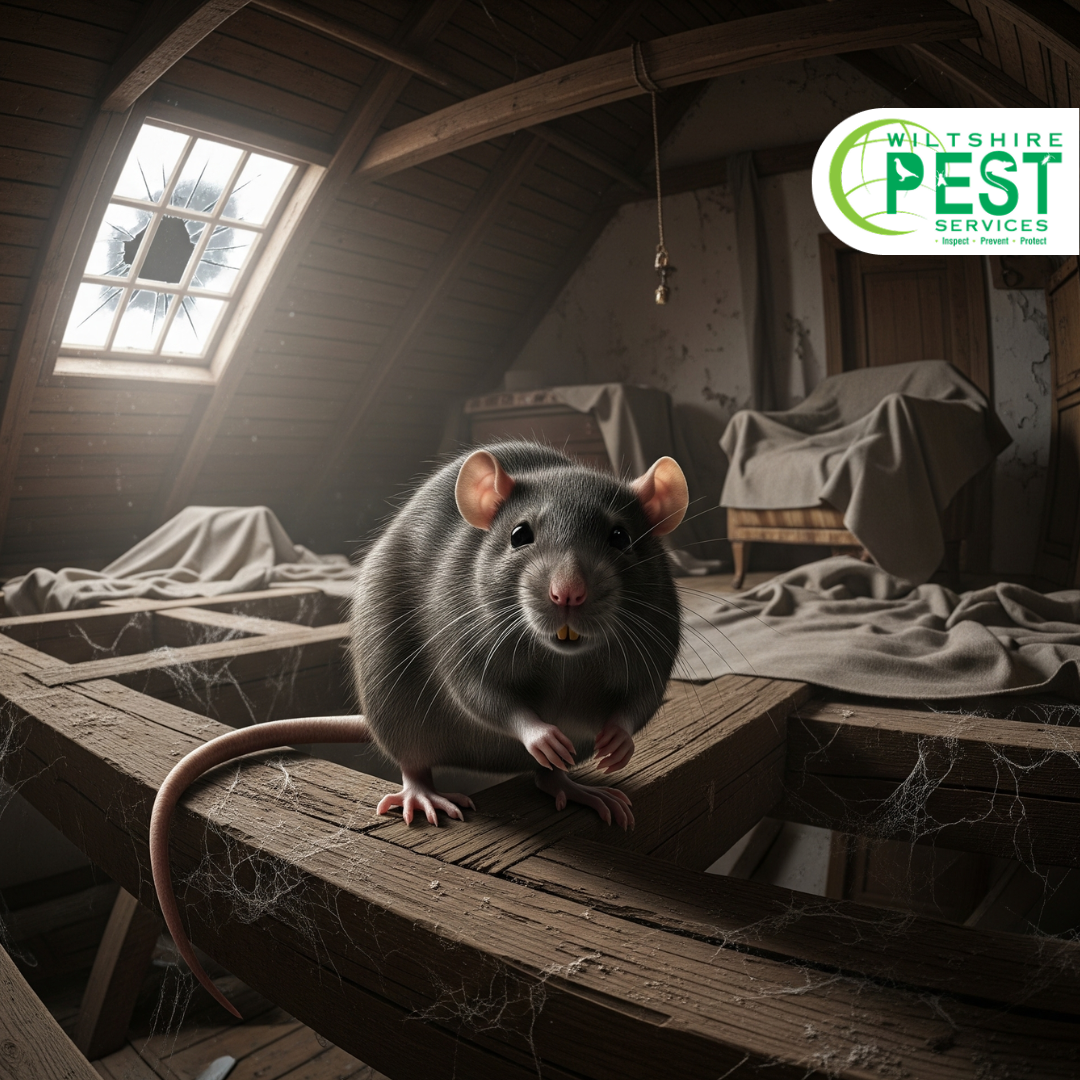
Scratching above the bedroom ceiling at night is one of the most common reasons people call us. Lofts are warm, dry and rarely disturbed, which makes them an ideal nesting spot for rats, especially from autumn into winter.
Rodent problems are common across the UK. Councils made 291,132 visits to homes with pest infestations in 2024, and 91% of those were for rats or mice (Direct Line/Aviva FOI data, 2025). This guide explains how to tell if you have rats in the loft, how they get in, whether they can reach the rest of the house, and what to do about it.
Signs of Rats in the Loft
Scratching and Scurrying at Night
Rats are mostly active after dark. Heavy scurrying, scratching or gnawing above the ceiling, usually at dusk, during the night or before dawn, is often the first sign.
Rat Droppings in the Loft
Rat droppings are dark, around 12 to 19mm long and shaped like a large grain of rice with tapered ends. You’ll usually find them along rafters, on boarding, on top of insulation and near the water tank.
Smears, Smells and Runs
Rats use the same routes every night and leave dark, greasy marks along joists and pipes. A strong, stale ammonia smell from urine can build up where they’re nesting.
Gnawing, Nests and Damaged Insulation
Rats gnaw constantly. Look for chewed timber, plastic pipes, stored boxes and electrical cables, which can be a fire risk. They tunnel through and shred insulation to build nests.
Rats, Mice or Squirrels in the Loft?
Not every noise in the loft is a rat. Mice and grey squirrels are just as common in Wiltshire lofts, and each needs a different approach.
| Rats | Mice | Squirrels | |
| When you hear them | Mostly at night | Mostly at night | Mostly early morning and daytime |
| What it sounds like | Heavy scurrying, gnawing | Light, quick scratching | Loud thumps, running, rolling |
| Droppings | Large, about 12 to 19mm, tapered ends | Small, about 3 to 8mm, pointed ends | About 8 to 12mm, rounded ends |
| Other signs | Greasy smears, strong ammonia smell | Many small droppings, shredded paper | Chewed timber at the eaves, torn insulation |
If the noise is mostly in the morning and daytime, it’s more likely to be squirrels. See our squirrel removal page. For mice, see mouse control.
How Do Rats Get in the Loft?
Gaps in the Roof, Fascias and Eaves
Slipped or broken roof tiles, gaps under fascias and soffits, and damaged ridge tiles all give rats a way in. An adult rat can squeeze through a gap about the width of your thumb.
Climbing Up the Outside of the House
Rats are good climbers. Ivy and other climbing plants, rough brickwork, drainpipes and cables can all lead them up to the roof line.
Up Through the Walls from Drains
This is the route many people don’t expect. Rats can travel up from broken drains, old soil pipes and wall cavities to reach the loft without ever being seen outside. If there’s no obvious gap in the roof, the drains are worth checking.
Older Homes and Barn Conversions
Stone cottages, period homes and barn conversions, common around Trowbridge, Bath and Marlborough, often have more gaps in the roof and walls, uncapped chimneys and old pipework that rats can use.
Can Rats in the Loft Get Into the House?
How Rats Move from the Loft to Your Rooms
Yes, they can. Rats follow pipes, cables and wall cavities down from the loft into ceilings, walls and floor voids. They can also gnaw through plasterboard and gaps around pipework under sinks, behind kitchen units and in airing cupboards.
Rats in the Loft but Not in the House?
It’s common for rats to stay in the loft at first, especially if they’re getting in from outside and finding food elsewhere. That can change quickly as numbers grow, so it’s best to deal with them early.
Signs They’ve Spread Beyond the Loft
Scratching inside walls or under floors, droppings in kitchen cupboards or under the sink, and gnaw marks on skirting boards all suggest rats are moving through the house. Our guide to rat infestations in your home covers these signs in more detail.
How to Get Rid of Rats in the Loft
Traps
Snap traps placed along runs and near droppings can work for one or two rats. Check them daily, wear gloves, and keep them away from children, pets and anywhere birds could reach.
Is It Safe to Use Rat Poison in the Loft?
It needs care. Poisoned rats often die in wall cavities, under floorboards or in the loft insulation, which can cause a strong smell for weeks. Loose bait can also be carried around and harm pets and wildlife. If bait is used, it should always be inside a secure, tamper-resistant bait station. Since 1 January 2026, stronger professional rodenticides can only be bought by trained, certified users.
Don’t Block the Holes Too Early
Sealing entry points while rats are still inside can trap them in the house and push them into your rooms. Proofing should be done once the rats have gone.
Clean Up Safely
Rat urine and droppings can carry diseases such as leptospirosis. Wear gloves and a mask, dampen droppings with disinfectant before removing them, and bag them for disposal. Badly soiled insulation may need replacing.
When to Call a Professional
It’s worth calling us if you can hear rats every night, the noise is coming from walls or floors as well as the loft, there are droppings near the water tank or wiring, or DIY traps haven’t worked within a week or two.
Our rat control service starts with a survey of the loft, roof line and drains to find how the rats are getting in. We then treat the infestation, return until it’s clear, and seal the entry points through our proofing services. Wiltshire Council also offers a charged rat treatment service for residents.
For seasonal tips, see our guide on preventing rat infestations in winter.
Rat Control Across Wiltshire
Wiltshire Pest Services Ltd is a BPCA-certified pest control company based in Warminster, covering homes and businesses across Wiltshire and neighbouring parts of Somerset, Dorset and Hampshire. If you think you have rats in your loft, call us on 07711 259749. Frequently Asked Questions
The most common signs are scurrying or gnawing at night, large dark droppings around 12 to 19mm long, greasy smears on joists, a strong ammonia smell and chewed or shredded insulation.
Warmth, shelter and a quiet place to nest. Nearby food sources such as bird feeders, compost and bins, plus easy access through roof gaps, climbing plants or broken drains, make a loft even more attractive.
Yes. Rats can follow pipes, cables and wall cavities from the loft into ceilings, walls and floors, and can gnaw through plasterboard to reach rooms.
Only with care. Poisoned rats often die in hard-to-reach places and cause a strong smell, and loose bait can harm pets and wildlife. Any bait should be in a secure bait station. A professional can advise on the safest option.
Rats and mice are mostly heard at night, squirrels mainly in the morning and daytime. Rat droppings are large with tapered ends, mouse droppings are small and pointed, and squirrel droppings are rounded.
Yes. Rats gnaw timber, pipes and electrical cables, which can be a fire risk, and they contaminate insulation with urine and droppings.