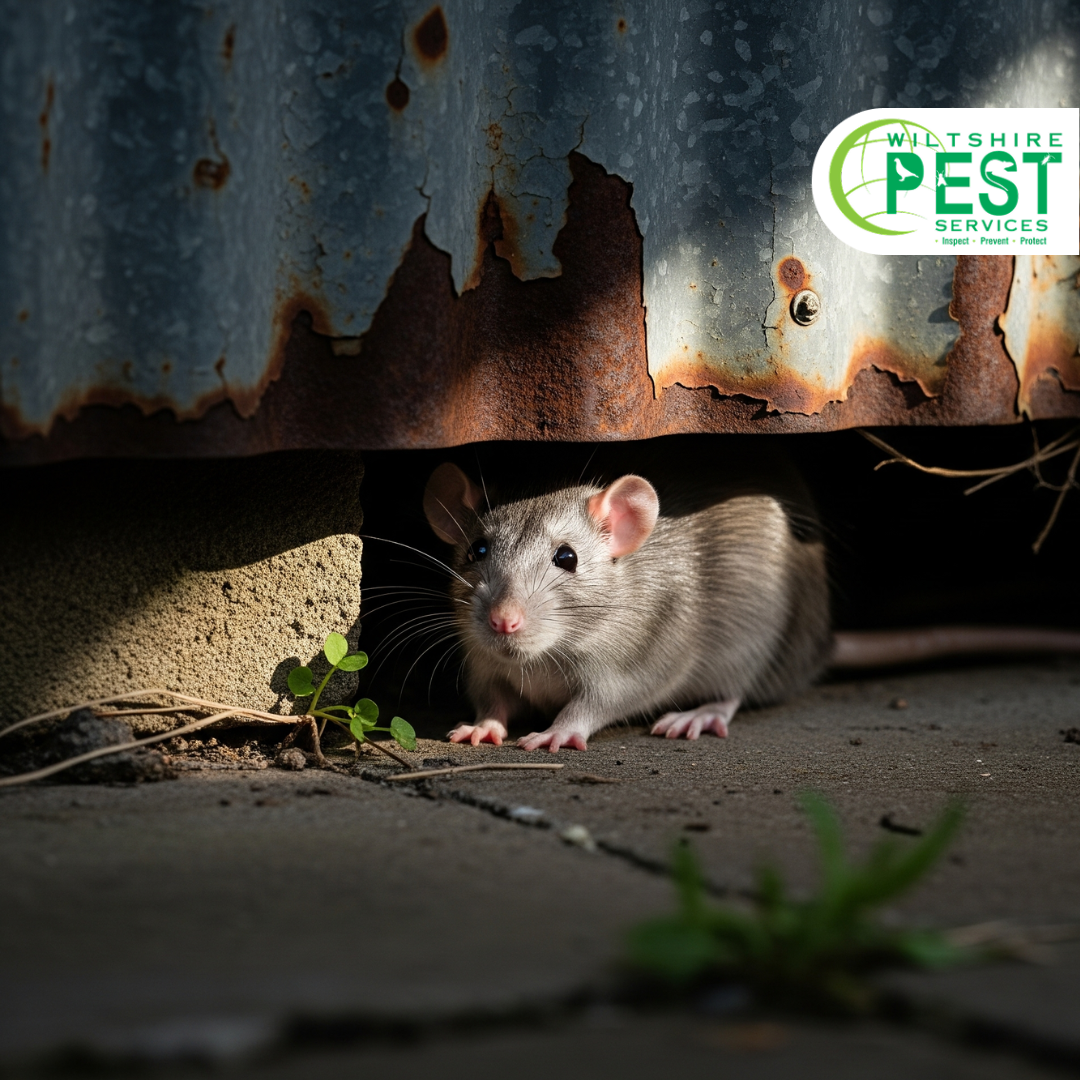
Scratching in the walls at night, droppings behind the cooker, a rat running along the garden fence. However it starts, a rat infestation needs dealing with quickly. Rats breed fast, gnaw through wiring and pipes, and can spread diseases such as leptospirosis (Weil’s disease) and salmonella through their urine and droppings.
Rats are not just a city problem. A 15-year study of English homes, based on national housing survey data, found rats inside 0.28% to 0.46% of homes and around 2.1% to 3.9% of properties, with higher rates in rural areas, older homes and homes with drainage problems. That describes much of Wiltshire, from market towns like Chippenham and Devizes to the villages around Marlborough and Warminster.
This guide covers how to spot a rat infestation in your house, where rats hide, who is responsible for dealing with them, and what to do next.
Signs of a Rat Infestation in Your House
You may not see a rat at all. Most infestations are found through the signs they leave behind.
Droppings
Rat droppings are dark, about the size of a grain of rice or larger, and shaped like a capsule. Fresh droppings are soft and shiny; older ones are dry and crumble. You’ll usually find them along walls, behind appliances, in cupboards and in lofts.
Gnaw Marks
Rats gnaw constantly to keep their teeth worn down. Look for chewed wood, plastic, cables, food packaging and pipe lagging. Chewed wiring is a real fire risk.
Grease Marks and Runs
Rats follow the same routes every night and leave dark, greasy smears along skirting boards, pipes and holes where their fur rubs. Outside, look for flattened paths through grass and along fence lines.
Noises at Night
Scratching, scuttling or gnawing sounds in walls, ceilings or under floors, usually after dark, are one of the most common first signs.
Smell
A strong, stale ammonia smell can build up where rats are nesting, especially in enclosed spaces like cupboards, lofts and under floors.
Burrows and Holes
Brown rats dig burrows about 6 to 9cm across under sheds, decking, compost bins and along walls. Holes with smooth, well-used edges suggest active use.
What Causes a Rat Infestation?
Rats move in when they find food, water and shelter close together. The common causes are:
Easy Food
Bird feeders, open compost, pet food, fallen fruit and bins with loose lids all attract rats. Spilled bird seed is one of the most common causes we see in Wiltshire gardens.
Damaged Drains
Rats live in sewers and can travel through cracked or broken drain pipes, displaced joints and old, unused pipework. From there they can reach wall cavities, under floors and gardens. Older properties are particularly at risk.
Gaps in the Building
An adult rat can squeeze through a gap about the width of your thumb. Gaps around pipes and cables, broken air bricks, damaged vents, missing roof tiles and holes in brickwork all give them a way in.
Cold Weather
Rats move closer to buildings in autumn and winter, looking for warmth and food. See our guide on how to prevent rat infestations in winter for seasonal tips.
Where Rats Hide in Your Home
Rats in Cavity Walls
Rats often get into cavity walls through broken drains, damaged air bricks or gaps around pipes. Once inside, they can move between floors and rooms unseen, nest in insulation and gnaw cables. Signs include scratching inside walls at night, droppings near vents and a smell with no obvious source. Treatment usually means finding the entry point, which is often a drain defect, rather than just baiting the wall.
Rats in the Ceiling
Ceiling voids and lofts are warm, quiet and close to pipework, so rats use them for nesting. You may hear them running above you at night, or see droppings and stains appearing on the ceiling. Even with no easy access to the ceiling void, a professional can locate and treat the problem through the loft, access points or by tracing how rats are getting up there. Our guide to rats in the loft covers this in more detail.
Rats Under Floorboards
Suspended timber floors, common in older Wiltshire homes, leave a void that rats can use as a highway. Scratching beneath the floor, droppings along skirting boards and a musty smell are the usual signs. Avoid lifting boards until you know where the rats are getting in, as they often arrive through damaged drains or air bricks.
Rats Under Your Shed
A shed on the ground gives rats a dry, sheltered nesting spot, especially near compost or bird feeders. Look for burrow holes around the base, chewed wood, droppings and flattened runs leading to the shed. Raising sheds on a solid base, keeping the area clear of clutter and removing food sources makes them far less attractive.
Do Rats Come Out During the Day?
Rats are mostly active at night, especially from dusk. Seeing one during the day doesn’t always mean a big problem, but it can be a warning sign.
What Daytime Sightings Can Mean
Rats out in daylight may have been disturbed, may be struggling to find food, or may be competing with other rats in a larger population. If you see rats during the day regularly, it’s worth getting a professional inspection.
Don’t Rely on Timing Alone
Not seeing rats doesn’t mean they have gone. Rats can be living in walls, floors or drains for months before anyone spots one. The signs above are a more reliable guide than sightings.
What to Do If You Have a Rat Infestation
Immediate Steps
- Store food, including pet food and bird seed, in sealed metal or hard plastic containers.
- Keep bins closed and compost bins sealed.
- Clear clutter from gardens, sheds and garages.
- Don’t touch droppings or nests with bare hands. Wear gloves and clean with disinfectant.
Why DIY Rat Control Often Falls Short
Shop-bought traps and baits can catch a few rats, but they rarely solve an infestation. They don’t find how the rats are getting in, and bait placed in the wrong spot can harm pets and wildlife. Stronger rules on professional rodenticides came in on 1 January 2026, and only trained, certified users can now buy them. Products sold to the public are weaker and sold in smaller amounts.
What a Professional Treatment Involves
A proper rat control treatment starts with a survey to find the activity and entry points, then targeted treatment using traps or tamper-resistant bait stations, and follow-up visits to confirm the rats have gone. Where drains are involved, a CCTV drain survey can show broken pipes that need repair.
Proofing to Stop Them Coming Back
Removing the rats is only half the job. Sealing gaps, fitting mesh over vents and air bricks, and repairing drains stops new rats from moving in. Our proofing services handle this for homes and businesses.
Who Is Responsible for Dealing With Rats?
If You Own Your Home
Homeowners are responsible for dealing with rats on their property, including in private drains that serve only their home.
If You Rent: Landlord or Tenant?
In England, landlords are generally responsible when rats get in because of disrepair, such as broken drains, damaged vents or gaps in the structure, or when the infestation was there before you moved in. Rented homes must also be free of serious hazards, and pests are one of the hazards councils can assess. Tenants can be responsible if their own actions caused the problem, for example leaving food waste or rubbish out.
If you rent, report the problem to your landlord in writing, with dated photos, and keep copies of all messages. If they don’t act, you can contact the council’s environmental health team. Shelter has up-to-date guidance for tenants. Since 1 May 2026, the Renters’ Rights Act has ended section 21 “no fault” evictions in England, so landlords can no longer end a tenancy that way after a tenant reports a problem.
Who Is Responsible for Rats in Drains?
It depends where the problem is. You are responsible for private drains on your property. Public sewers are the water company’s responsibility, which is Wessex Water for most of Wiltshire. Wessex Water advises contacting your local council first. If the council confirms the rats are coming from a public sewer, the water company will investigate, usually with a CCTV survey.
What If the Rats Are Coming From a Neighbour?
Talk to your neighbour first, as they may not know. If the problem continues, the council’s environmental health team can investigate. Wiltshire Council also offers a charged rat treatment service for residents.
Rat Control Across Wiltshire
Wiltshire Pest Services Ltd is a BPCA-certified pest control company based in Warminster, covering homes, rental properties and businesses across Wiltshire and neighbouring parts of Somerset, Dorset and Hampshire. If you think you have a rat infestation, call us on 07711 259749 for a survey and a clear plan to remove the rats and keep them out.
Frequently Asked Questions
The most common signs are droppings, gnaw marks, greasy smears along walls, scratching noises at night and a stale ammonia smell. Burrows in the garden or under sheds are also a strong sign.
Yes. Rats can live in cavity walls, ceiling voids and under floors for a long time without being seen. Noises at night and droppings are usually the first clues.
In most cases, yes, if the rats are getting in through disrepair or were there before you moved in. You may be responsible if the problem was caused by how you stored food or rubbish. Report it to your landlord in writing.
Contact your local council first. If they confirm the rats are coming from a public sewer, the water company (Wessex Water for most of Wiltshire) will investigate. Rats in your own private drains are your responsibility.
Mostly, but not always. Rats seen regularly during the day may have been disturbed, may be short of food, or may be part of a larger population.
Clear away all food, store it in sealed containers, clean surfaces with disinfectant and call a professional. A rat in the kitchen usually means there is an entry point, often a gap around pipes or a damaged drain, that needs finding.