If flies are gathering on your upstairs windows in autumn, or turning up in the loft on a sunny winter afternoon, you might assume you have a house fly problem. In most cases you don’t. Those slow, heavy flies are usually cluster flies, and they behave very differently from the house flies you see in the kitchen in summer.
Knowing which one you have matters, because the cause, the risk and the treatment are completely different. Here’s how to tell cluster flies vs house flies apart, where cluster flies come from, and why they keep coming back to the same homes every year.
Cluster Flies vs House Flies at a Glance
| Cluster fly | House fly | |
| Size | Slightly larger and stockier | Slightly smaller and slimmer |
| Colour | Dark grey to olive, with fine golden hairs on the thorax | Lighter grey, with four dark stripes on the thorax |
| Wings at rest | Overlap over the body | Held apart |
| Movement | Slow and sluggish, easy to swat | Fast and darting |
| Where you see them | Lofts, upstairs windows, spare rooms | Kitchens, bins, food |
| Time of year | Autumn, warm winter days, early spring | Late spring to early autumn |
| Why they come in | Shelter to spend the winter | Food and places to breed |
| Where they breed | Outdoors in soil, on earthworms | Rotting food, waste and manure |
What Do Cluster Flies Look Like?
At first glance a cluster fly looks like a large house fly. Look a little closer and the differences are clear.
Size and Shape
A cluster fly is slightly bigger and bulkier than a house fly, with a heavier, rounder body.
Colour and Golden Hairs
Cluster flies are dark grey or olive, with a chequered pattern on the abdomen that seems to shift in the light. The easiest giveaway is the fine yellow or golden hairs on the thorax, the section behind the head, although these can rub off older flies.
Wings at Rest
When a cluster fly lands, its wings fold over each other across its back. A house fly keeps its wings slightly apart.
How They Move
Cluster flies are slow and clumsy. They buzz against windows, crawl rather than fly, and are easy to catch.
How to Spot a House Fly
House flies are lighter grey with four dark stripes running down the thorax, reddish eyes and quick, restless flight. You’ll usually see them one or two at a time around food, rather than in groups.
Types of Cluster Flies
“Cluster fly” isn’t one species. It’s a name for several flies that gather in buildings to spend the winter. There are four main types in the UK.
Common Cluster Fly
The one most people mean, and the one this guide mainly covers. A large, sluggish, dark grey fly with golden hairs on the thorax, found in lofts and on upstairs windows from autumn to spring.
Yellow Swarm Fly
A tiny yellow and black fly, only about 3mm long, that is easily mistaken for a fruit fly. In late summer and autumn it can gather in large swarms around the eaves, soffits and window frames of buildings, and it is a real nuisance when it gets inside.
Green Cluster Fly
A small fly with a metallic green or blue sheen. It behaves like the common cluster fly, gathering in roof spaces and on windows to overwinter.
Autumn Fly
Very similar to a house fly, which is why it’s often misidentified. It is common around cattle in summer and moves into buildings in autumn, especially in rural areas.
Where Do Cluster Flies Come From?
Cluster flies don’t come from inside your house. Their life cycle happens outdoors, in grass and soil.
The Cluster Fly Life Cycle
In spring and summer, females lay eggs in the soil. The larvae find earthworms, feed inside them and then pupate in the ground. Adults emerge and feed on flowers and plant sap through the warmer months, and there can be several generations in one summer.
Why They Move Indoors in Autumn
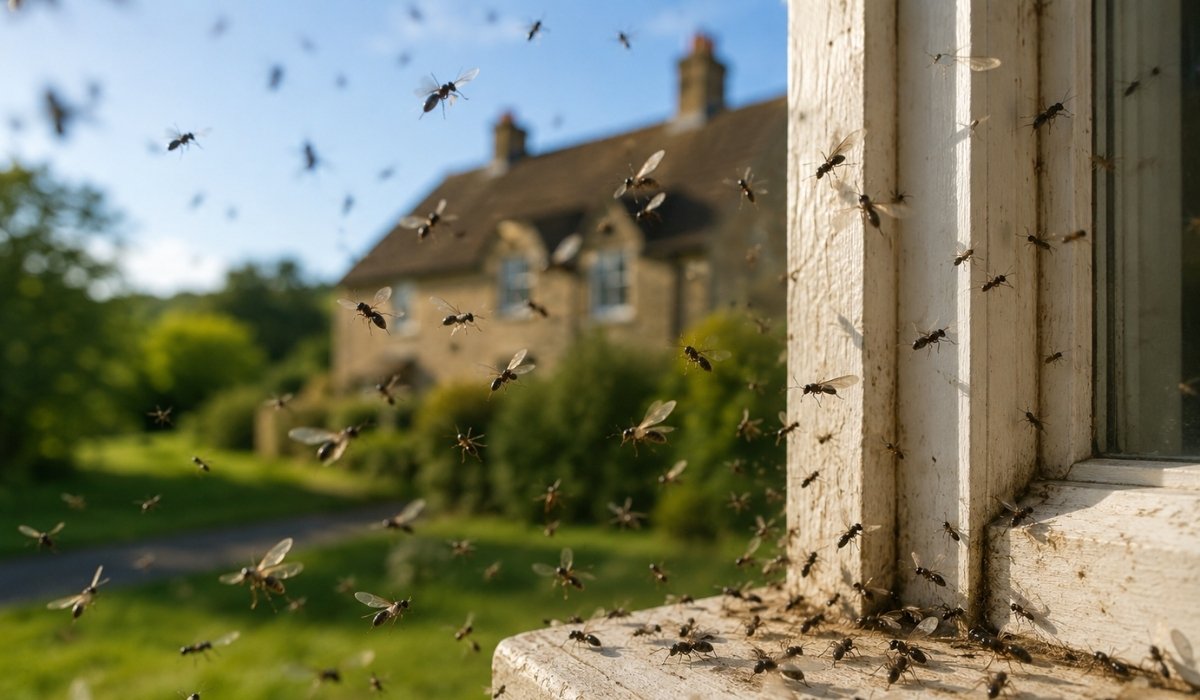
As the days shorten in late summer and autumn, the adult flies look for a sheltered, dry place to spend the winter. South and west facing walls warm up in the afternoon sun, so the flies gather there, then crawl in through gaps around roof tiles, eaves, soffits, window frames and vents. They can get through surprisingly small gaps, and even find their way in around closed uPVC windows. Lofts, roof voids and wall cavities give them exactly the conditions they need.
Why Cluster Flies Are Common in Wiltshire
Homes near farmland, paddocks, large lawns or open countryside, from villages around Warminster to properties on the edge of Marlborough and Devizes, are close to the grassland where cluster flies breed. Older stone properties with more gaps in the roof and walls give them plenty of ways in.
Where House Flies Come From
House flies are the opposite. They come indoors for food and moisture, and they breed in rotting food, bins, compost and animal waste, often close to or inside the building.
Do Cluster Flies Bite?
No. Cluster flies don’t bite people or pets, and they don’t sting. House flies don’t bite either, although a similar looking species, the stable fly, does bite and is more common around farms and stables.
Which Fly Is the Bigger Hygiene Problem?
Because cluster flies don’t breed in waste and don’t feed on your food, they aren’t considered a health risk. House flies land on waste and then on food, so they can spread bacteria in kitchens and food businesses.
The Mess Cluster Flies Leave Behind
Cluster flies are still a real nuisance. Large numbers can leave small dark or yellowish marks on walls and windows, dead flies build up in lofts and on sills, and the dead flies can attract other insects such as carpet beetles.
How Long Do Cluster Flies Live?
The flies you find indoors in autumn are adults that hatched outside during the summer. Once they settle into a loft or wall cavity they become inactive and can survive the whole winter there, living off their reserves.
Cluster Flies on Warm Winter Days
On mild, sunny days, some wake up and follow the warmth and light into your rooms. That’s why you can find cluster flies buzzing at a window in December or January, long after house flies have disappeared. In spring, the survivors head back outside to breed, and the cycle starts again.
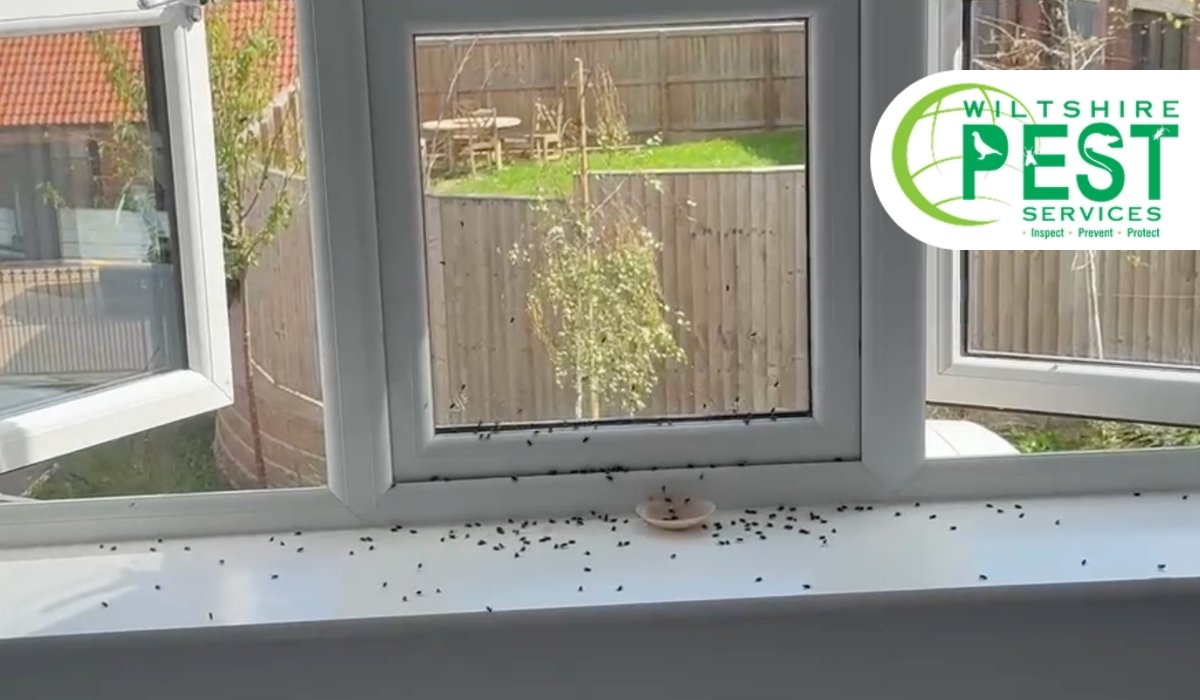
Why You Find Dead Flies on Windowsills
Flies that wander into heated rooms usually don’t last long. The warm, dry air uses up their energy, which is why you often find them dead on windowsills.
Why Cluster Flies Keep Coming Back
Many Wiltshire homeowners tell us the flies return to the same house, and even the same room, every autumn. There’s a reason for that.
The Pheromone They Leave Behind
Cluster flies leave a pheromone on the walls of the building where they spend the winter. The following autumn, the next generation picks up that scent and heads for the same property. So once you’ve had cluster flies, you tend to get them year after year, even if every fly that came in was killed.
The Right Position and Warmth
Cluster flies are also drawn to buildings with warm, sunny walls near open grassland. The same features that attracted them one year will attract them again.
How to Stop Cluster Flies Returning
There is no quick, one-off fix. Cluster flies breed outdoors across a wide area, and the pheromone they leave draws them back to the same building. What works is keeping on top of them over several seasons.
Regular Treatments Each Autumn
Treating the loft and roof spaces where the flies gather, every year as they arrive, is the most effective approach. Each treatment reduces the numbers, and with regular treatment the problem usually gets better over a number of years.
Proofing Helps, but Won’t Solve It
Sealing gaps around eaves, soffits, roof tiles and vents, and fitting fine mesh over loft vents, can reduce the number of flies getting in. But cluster flies can get through very small gaps, including around closed uPVC windows, so proofing on its own won’t keep them out. Think of it as a way to ease the problem alongside treatment, not a cure.
Clear Out Dead Flies
Vacuum dead flies from lofts, sills and window frames so they don’t attract other insects.
Don’t Rely on Sprays Alone
Killing the flies you can see does nothing about the hundreds sheltering in the roof void or wall cavity.
When to Call a Professional
For flies that are already inside, our guide on how to get rid of cluster flies covers the options in more detail. If the problem comes back every year, professional fly control treats the loft and void spaces where the flies are clustering. Regular treatment each autumn, alongside proofing where it helps, is the best way to bring numbers down over time.
Seeing Ladybirds Too?
Cluster flies often share lofts and window frames with harlequin ladybirds, which shelter for the winter in the same way. If you’re seeing both, read our guide to dealing with a harlequin ladybird infestation or see our ladybird control service.
Cluster Flies in Your Home? Talk to Wiltshire Pest Services Ltd
Wiltshire Pest Services Ltd is a BPCA-certified pest control company based in Warminster, covering homes and businesses across Wiltshire and neighbouring parts of Somerset, Dorset and Hampshire. If flies are gathering in your loft or on your windows and you’re not sure what they are, call us on 07711 259749 and we’ll help you identify them and find the right solution.
Frequently Asked Questions
Watch how it moves and how it rests. Cluster flies are slow and sluggish, with wings that overlap across the back and fine golden hairs behind the head. House flies are quick and restless, lighter grey with dark stripes, and keep their wings apart.
Cluster flies spend the winter sheltering in lofts and wall cavities. On warm, sunny days some become active and move towards light and heat, so they turn up at windows and in upstairs rooms even in the middle of winter.
No. Cluster flies lay their eggs in soil outdoors, and the larvae develop inside earthworms. They use your home only as a place to spend the winter.
Most leave in spring, when the weather warms up and they head outside to breed. Because they leave a pheromone on the building, a new generation is likely to return the following autumn. Regular treatment reduces the numbers over several years.
Not completely. Sealing gaps and fitting mesh over vents can reduce the numbers getting in, but cluster flies can squeeze through very small gaps, including around closed uPVC windows. Proofing works best alongside regular treatment.
No. Cluster flies are attracted by shelter and warmth, not food or waste. Clean, well-kept homes get them too, especially near fields and open grassland.