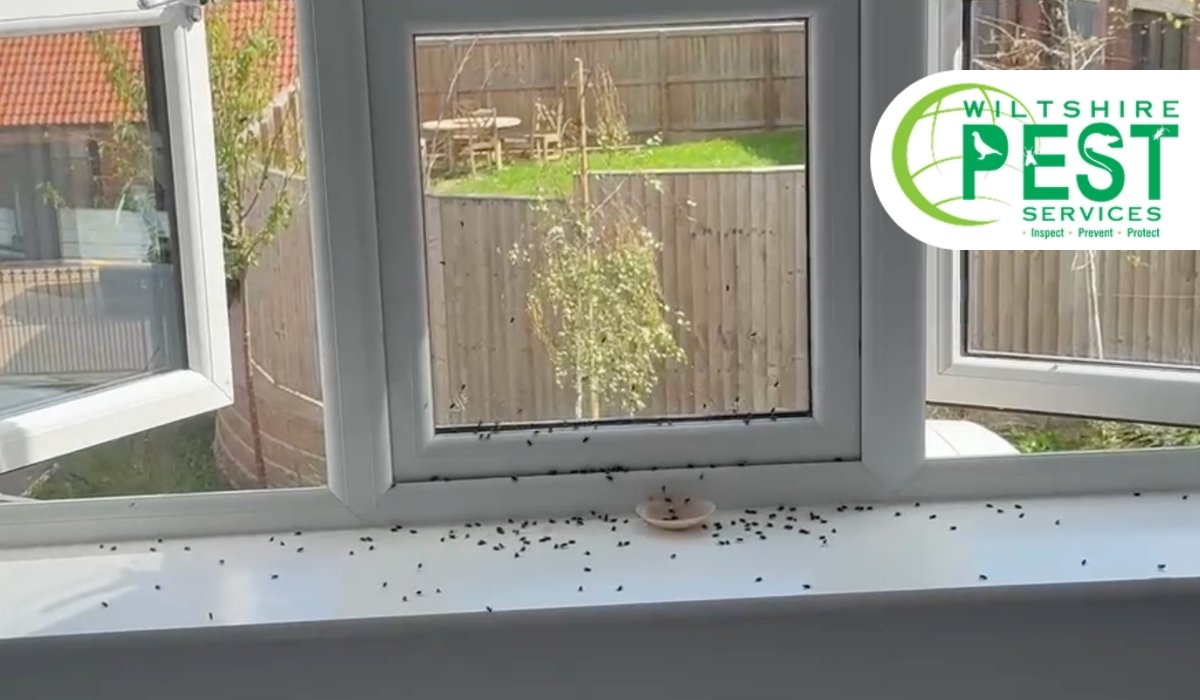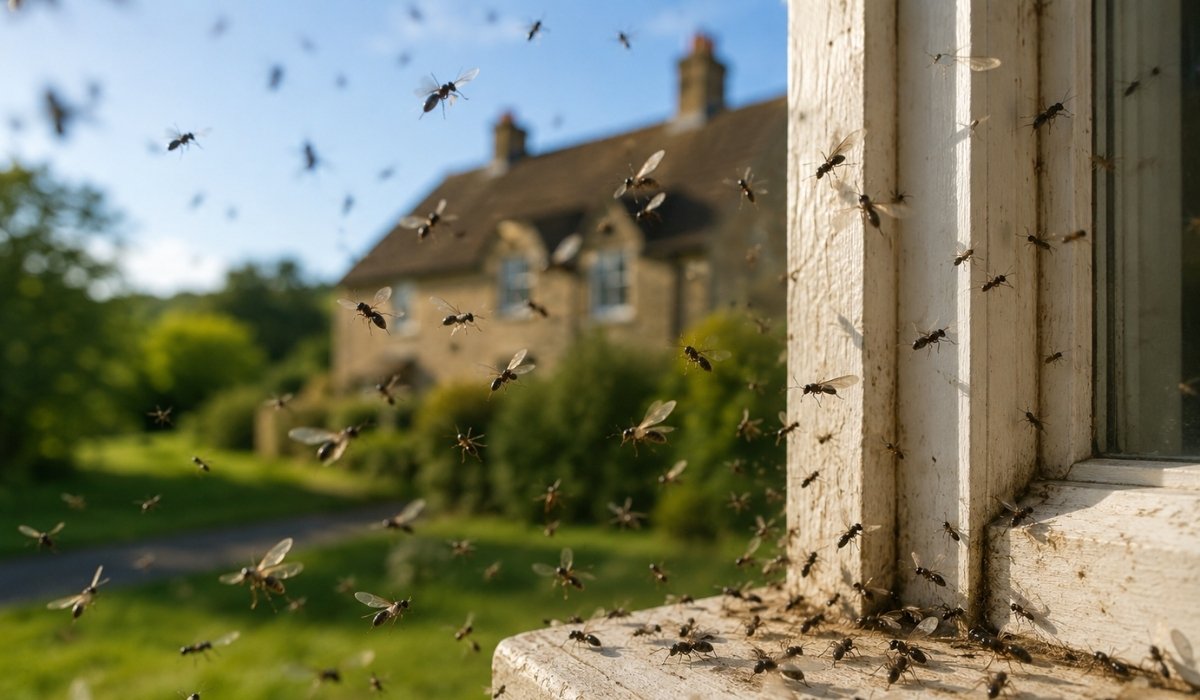
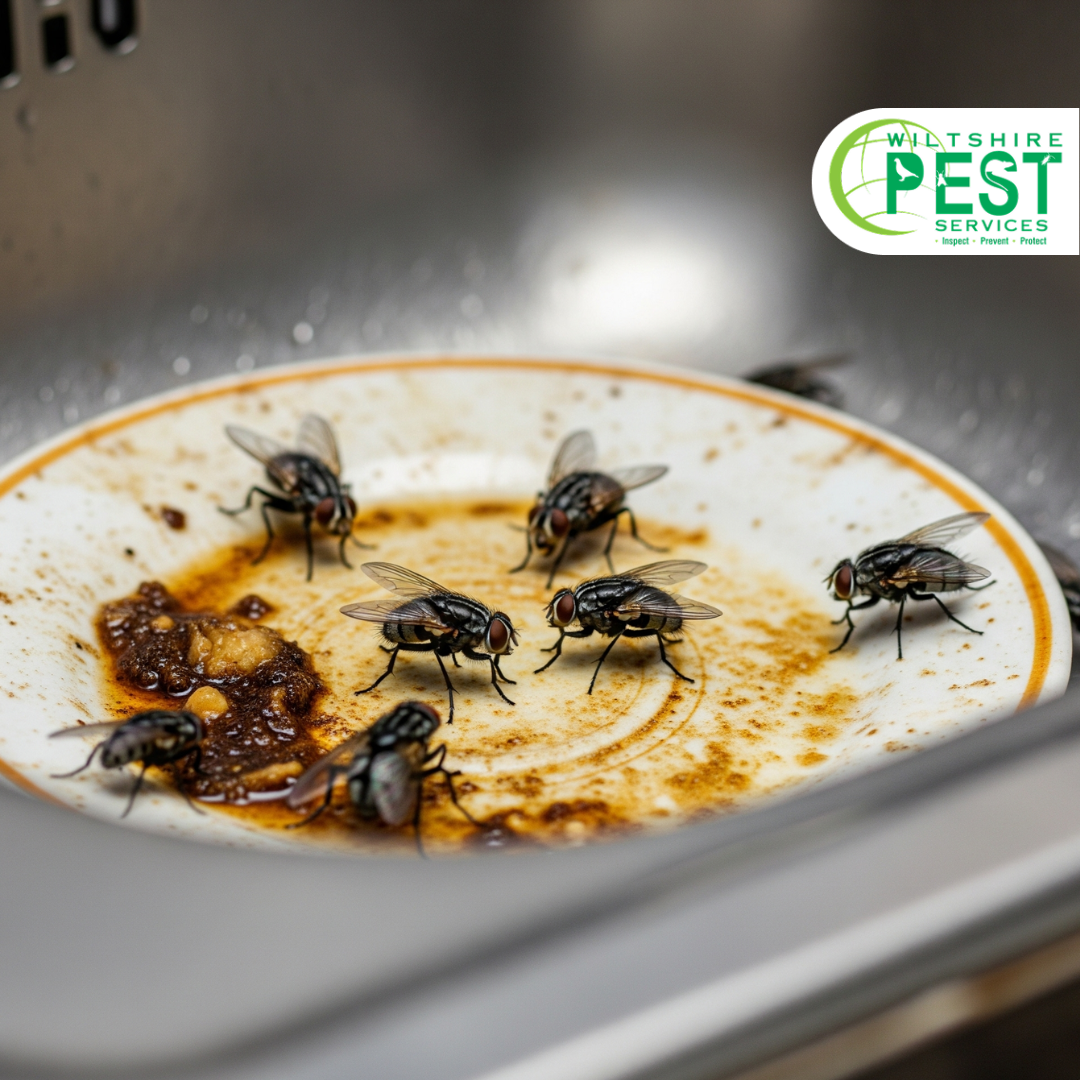
Every summer the same thing happens. The weather warms up, the windows open, and suddenly there are flies circling the kitchen, buzzing at the windows and landing on the food. Whether you’re in Swindon, Chippenham, Devizes or out in the countryside, flies are one of the most common pest problems we see from late spring onwards.
Flies are more than a nuisance. They land on waste and then on food, and they can spread bacteria in kitchens and food businesses. The good news is that most fly problems can be sorted once you find where they’re coming from. This guide explains why flies are worse in summer, which flies you’re likely to have, and how to get rid of flies in your house and keep them away.
Why Are There So Many Flies in Summer?
Warm Weather Speeds Up Breeding
Flies breed much faster in warm weather. In summer temperatures, a house fly can go from egg to adult in around 7 to 10 days, and a single female can lay over 500 eggs in her lifetime. A few flies in June can become a real problem by July if they have somewhere to breed.
Why Some Years Are Worse Than Others
If you’ve wondered why there are so many flies this year, the weather is usually the answer. Long warm spells, especially after rain, give flies ideal breeding conditions. Add open windows and doors, more food eaten outside and bins that fill up faster in the heat, and numbers can rise quickly.
Why Wiltshire Homes Get Flies
Wiltshire’s mix of farmland, livestock, market towns and villages gives flies plenty of places to breed. Homes near farms and stables often see more flies in summer, while town centre flats and shops can struggle with overflowing bins in the heat.
Which Flies Are in Your House?
Different flies come from different sources, so knowing which one you have tells you where to look.
House Flies
Grey, about 6 to 7mm long, with four dark stripes behind the head. House flies breed in rotting food, bins, compost and animal waste, and are the most common fly in UK kitchens in summer.
Bluebottles and Greenbottles
Large, noisy flies with a shiny blue or green body. They breed in meat and dead animals. If you suddenly find lots of big flies in one room, it can mean a dead mouse, rat or bird is hidden under the floor, in a wall or in the loft. Finding and removing the source usually solves the problem.
Fruit Flies
Tiny, pale brown flies with red eyes that hover around fruit bowls, bins and recycling. They breed in ripe or rotting fruit and sugary spills.
Drain Flies
Small, fuzzy, moth-like flies that rest on bathroom and kitchen walls. They breed in the slimy build-up inside drains and plugholes.
Cluster Flies
Larger, slow flies that gather on windows and in lofts in autumn and on warm winter days. They don’t breed indoors and aren’t a summer problem. See our guide on how to get rid of cluster flies if you’re seeing them later in the year.
Signs of a Fly Problem
A fly or two coming in through an open window is normal. These signs point to a bigger problem:
- Lots of flies in the house suddenly, especially in one room, which often means they’re breeding nearby.
- Flies constantly around bins or drains.
- Maggots in bins, compost or waste areas.
- Small dark spots on walls, windows and light fittings where flies rest.
- Flies returning even after you’ve cleaned and sprayed.
How to Get Rid of Flies in Your House
Find and Remove the Breeding Source
This is the step that matters most. Spraying the flies you can see won’t help if more are hatching every day. Check bins, recycling, compost caddies, pet bowls and litter trays, fruit bowls, drains and plugholes. If big flies keep appearing in one room with no obvious cause, look for a dead animal.
Clean Bins and Drains
Wash bins and food caddies regularly in summer, and keep lids shut. Clean plugholes and kitchen drains to remove the build-up that drain flies breed in.
Use Traps and Fly Screens
Sticky traps and UV fly traps catch flies without spraying, and are useful in kitchens and near windows. Fly screens on windows and doors stop most flies getting in at all.
Do Fly Sprays Work?
Fly sprays kill the flies they hit, but they don’t reach eggs or larvae, so the problem comes back unless you deal with the source. If you do use a spray, follow the label, keep it away from food, and keep pets and children out of the room until it has settled.
How to Keep Flies Away
Keep Bins Sealed and Clean
Flies are drawn to rotting waste. Keep lids closed, double-bag food waste in hot weather and wash bins out regularly.
Fit Fly Screens
Mesh screens on windows and doors let air in and keep flies out, which is especially useful in kitchens.
Cover Food
Keep food covered indoors and outdoors, particularly at barbecues and meals in the garden, and clear up straight after eating.
Manage Compost Heaps
Keep compost bins closed and away from doors and windows, and avoid adding meat or cooked food.
Clean Up After Pets
Pet waste is a major attraction for flies. Clear it from the garden daily and keep litter trays clean.
What Smells Do Flies Hate?
If you’d rather try natural options, there are a few that can help with small problems.
Essential Oils and Herbs
Lab studies suggest oils such as peppermint, eucalyptus, lemongrass and citronella can repel flies. At home the effect is mild and wears off quickly, so treat them as a deterrent rather than a solution. Pots of basil, mint or lavender by doors and windows may help a little.
Vinegar Traps for Fruit Flies
A small bowl of apple cider vinegar with a drop of washing-up liquid, covered with cling film with a few holes, catches fruit flies well. It won’t do much against house flies or bluebottles.
Natural remedies won’t fix a real infestation. If flies keep coming back, the breeding source needs finding.
Flies in Food Businesses
If you run a pub, café, restaurant, food production unit or care home, flies are a compliance issue as well as a nuisance. Food hygiene law requires food businesses to have adequate procedures to control pests, and openable windows in food areas should be fitted with insect-proof screens where necessary. A visible fly problem can lead to complaints, bad reviews and a lower food hygiene rating at your next inspection.
We provide contract fly control for Wiltshire businesses, including inspections, fly screens, UV fly units and records you can show an environmental health officer. Our team can work out of hours to avoid disruption.
When to Call a Professional
It’s worth getting help if flies keep coming back after you’ve cleaned up, you can’t find where they’re coming from, you suspect a dead animal in a wall or under the floor, or you run a food business.
Our fly control service starts by identifying the fly and finding the breeding source, then treating it and putting prevention in place, such as fly screens or proofing, so they don’t come back.
Wiltshire Pest Services Ltd is a BPCA-certified pest control company based in Warminster, covering homes and businesses across Wiltshire and neighbouring parts of Somerset, Dorset and Hampshire. Call us on 07711 259749 to book an inspection.
Frequently Asked Questions
Flies are usually worst from June to August, when warm weather speeds up breeding. Numbers drop in autumn, although cluster flies can appear in lofts and on windows from autumn into winter.
Large numbers of big flies, such as bluebottles, appearing in one room often mean something is decomposing nearby, like a dead mouse, rat or bird under the floor, in a wall or in the loft. Once the source is removed, the flies usually stop within a few days.
Adult house flies usually live for around 2 to 4 weeks. In warm weather they can go from egg to adult in 7 to 10 days, which is why numbers can build up so quickly.
Sprays kill the flies they reach but not the eggs or larvae. Unless you remove the breeding source, new flies will keep hatching.
We choose treatments to suit your home and explain any precautions before we start, such as keeping pets and children out of treated areas for a set time.
Yes. We provide contract fly control for pubs, cafés, restaurants, food production and care homes across Wiltshire, with regular visits and records for inspections.