If you have stepped outside in Warminster, Trowbridge, or Chippenham on a warm August afternoon and found the air suddenly full of ants, you have met Flying Ant Day. It is one of the strangest natural events in the British calendar, and it catches Wiltshire residents off guard every summer. Despite the name, citizen science research from the Royal Society of Biology found that flying ants have been recorded on as many as 96 percent of days between the start of June and the start of September, which means it is far closer to a season than a single day. The Natural History Museum backs this up, describing what people call Flying Ant Day as more accurately a flying ant season, with several peaks of activity rather than one nationwide swarm.
At Wiltshire Pest Services, we get a steady run of calls every August from homeowners across the county who assume something has gone badly wrong when ants suddenly appear in their hundreds. In most cases, nothing has. This guide explains exactly what Flying Ant Day is, why August is peak season for it here in Wiltshire, and how to tell the difference between a normal summer nuisance and the early signs of an ant problem worth calling in the experts for.
What Is Flying Ant Day, Exactly?
Flying Ant Day refers to the nuptial flight of the black garden ant, Lasius niger, which is the species found in the vast majority of Wiltshire gardens, patios, and pavement cracks. For most of the year, the only ants you see are wingless worker ants going about their business. Once a colony matures, usually after several years, it starts producing winged queens and winged males.
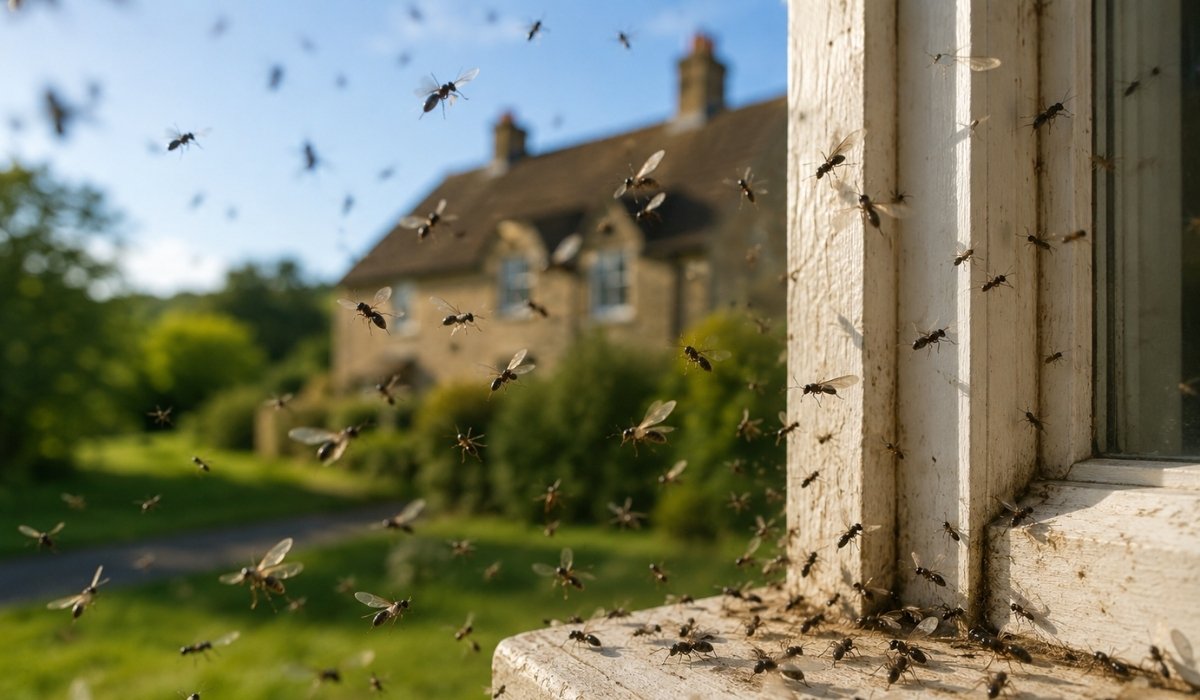
On the right day, these winged ants leave the nest together and take to the air to mate. Because many colonies across a town or village respond to the same weather conditions at once, it can look and feel like the whole area’s ant population has erupted simultaneously, hence the nickname.
Where Do Flying Ants Come From?
Flying ants are not a separate species. They are the winged reproductive members, queens and males, of ant colonies that have most likely been living quietly in your lawn, flower beds, or under your patio for a year or more. The wingless worker ants you see the rest of the year belong to the very same colony.
Why Does It Happen in August Across Wiltshire?
Flying ants need very specific conditions before they will swarm. The trigger is warm, humid, and still weather, often arriving just after a spell of rain. Wind and rain both suppress flight, since a soaked or gusty sky makes mating far harder and more dangerous for the ants, so colonies effectively wait for a calm, muggy window.
August tends to deliver those conditions reliably across Wiltshire. The ground has had a full summer to warm up, humidity builds after thundery spells, and the still, close afternoons typical of late summer give colonies the signal they are waiting for.
When Is Flying Ant Day, Exactly?
There is no fixed date, and there never has been. Because the trigger is weather rather than a calendar entry, the timing shifts every year and even from village to village, with some Wiltshire towns seeing activity days before their neighbours a few miles away. Most years, the bulk of the activity across the county falls somewhere in late July or August.
Why Do Flying Ants Suddenly Appear?
It can feel sudden because the trigger conditions themselves arrive quickly. A muggy, overcast morning can turn into the right combination of warmth and stillness by early afternoon, and colonies that have been building up winged ants for weeks respond within hours. That rapid, coordinated response is what creates the sense of ants appearing from nowhere.
The Life Cycle Behind the Swarm
The swarm itself is a mating flight. Winged males and virgin queens mate on the wing, sometimes with several partners. The males die shortly afterwards, having served their only purpose. Each surviving queen lands, deliberately bites or chews off her own wings, and searches for a crack, gap, or patch of soil to start a brand new colony.
How Long Do Flying Ants Live?
Winged males live only a few days at most, dying soon after mating. A successful queen is a different story entirely. Once she has shed her wings and established a nest, she can go on to live for well over a decade, laying the eggs that build an entirely new colony from scratch.
Is Flying Ant Day a Problem for Wiltshire Homes and Gardens?
For the most part, no. Black garden ants are not aggressive and the swarm itself is harmless to people and pets. Ants are also genuinely useful in a garden, aerating soil as they tunnel and providing a valuable summer food source for birds.
Are Flying Ants Dangerous? Can They Bite or Sting?
Black garden ants do not sting, and while they technically have the ability to give a very light nip, it is rare and causes nothing more than brief, mild irritation. They carry no disease risk to humans. The main nuisance is volume, not danger.
Why Do Seagulls Go Wild for Flying Ants?
If you have noticed gulls and starlings wheeling and diving overhead during a big swarm, that is not a coincidence. Flying ants are a rich, easy meal, and birds across Wiltshire’s towns and countryside take full advantage of the sudden abundance, which is one of the reasons pest experts see the ants themselves as more beneficial than harmful.
Where it becomes a genuine concern is when a newly mated queen chooses a spot inside a wall cavity, under a floor, or close to a food preparation area to start her colony. That is when a seasonal nuisance can turn into a longer term ant problem that is worth addressing properly rather than ignoring.
What To Do When Flying Ants Swarm Your Property
The single most important piece of advice is to leave them alone. Boiling water and shop-bought insecticide sprays are a poor response to a beneficial, largely harmless species, and they rarely deal with the underlying nest, which is usually well below ground or hidden inside a structure.
How to Get Rid of Flying Ants the Right Way
- Sweep flying ants off patios, paths, and outdoor furniture rather than spraying them
- Close doors and windows during peak swarming hours on a hot, still afternoon
- Bring in washing early if ants are active nearby
- Cover food and drinks at outdoor gatherings, since ants are drawn to anything sweet
What Are Flying Ants Attracted To?
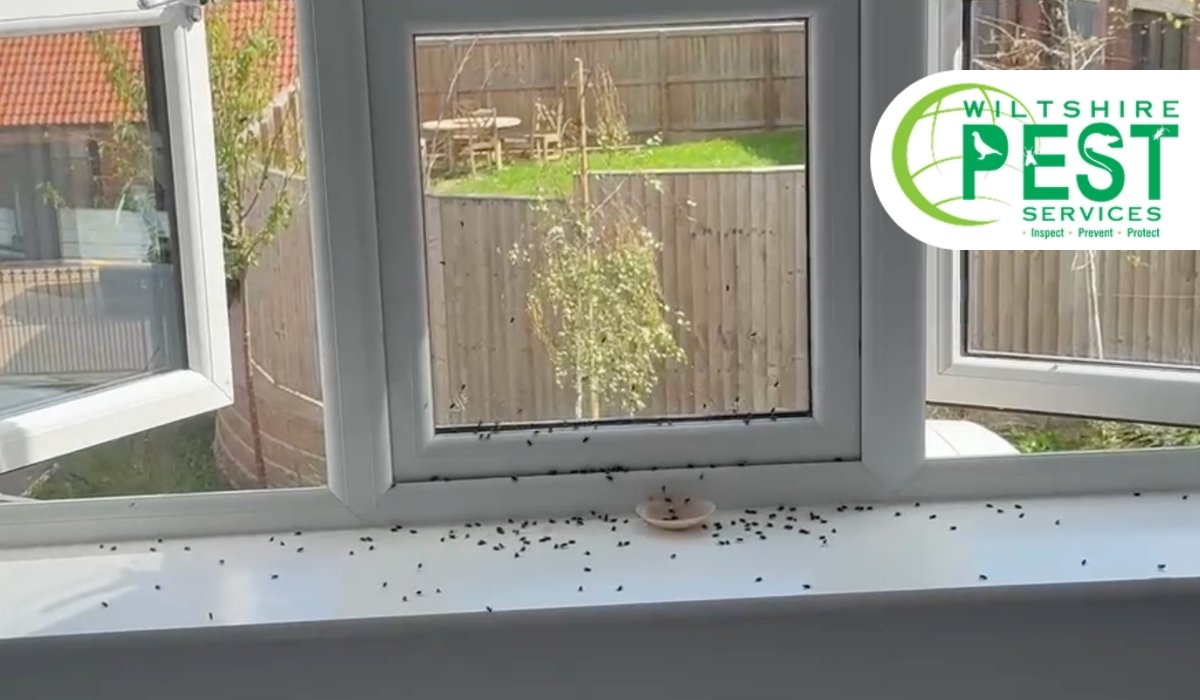
Flying ants are drawn to light, warmth, and anything sugary, which is why they cluster around windows, outdoor lights, and drinks left uncovered at a summer barbecue. Keeping food covered and curtains or blinds partly closed during a swarm makes a noticeable difference.
For most Wiltshire households, the swarm passes within a few hours and everyday life returns to normal by the next day. If you would rather have a professional take a look before treating anything yourself, our pest control services page covers how we assess and, where needed, treat an active infestation without unnecessary chemical use.
When a Few Flying Ants Becomes an Ant Problem
A one-off swarm on a warm August afternoon is normal and rarely worth calling anyone about. It is worth paying closer attention if you notice ant trails indoors that persist for days, ants consistently emerging from a specific gap near a doorframe, airbrick, or utility pipe, or activity concentrated around a kitchen or food store rather than the garden.
Flying Ants in the House: When to Worry
A handful of flying ants finding their way indoors on a swarm afternoon is normal and not a sign of infestation. Persistent indoor activity over several days, particularly trails of wingless worker ants rather than a one-off cluster of winged ones, usually means a colony has settled somewhere inside the structure and is worth having checked.
These patterns usually point to an established colony rather than a passing swarm, and they are far easier to resolve early. Our ant control treatments target the colony at its source rather than just the visible workers, and our proofing services seal up the entry points a new queen might otherwise use to set up home inside your property in the first place.
Flying Ant Day is a genuinely fascinating piece of British wildlife, not a sign that something has gone wrong. Across Wiltshire, from Warminster to Trowbridge, Chippenham, and everywhere in between, the same warm, humid, still afternoons that make for a nice August evening are exactly what triggers a swarm. In the vast majority of cases, the best response is simply to let it pass.
If ants keep coming back, seem to be nesting inside your home, or you would just like a professional opinion before the season is over, our team at Wiltshire Pest Services is happy to take a look. We have been giving honest, no-pressure pest advice across the county since 2017, and we would rather tell you that you do not need treatment than sell you one you do not.
Frequently Asked Questions
There is no fixed date. It typically falls somewhere in July or August, triggered by warm, humid, still weather, often shortly after rain. Different Wiltshire towns can see activity on different days depending on local conditions.
No. Black garden ants do not sting and are not aggressive towards people or animals. They can be a nuisance in large numbers, but they pose no real health risk.
It is not recommended. The swarm is brief, the species is beneficial, and spray rarely reaches the underlying nest. Sweeping ants away and closing windows during peak activity is usually all that is needed.
Winged ants are strong fliers and are drawn towards light, so open windows and doors during a swarm can let them in. Persistent indoor activity over several days, rather than a single afternoon, can suggest a colony has settled nearby.
Most individual swarms last a few hours on a single afternoon, though the wider flying ant season across Wiltshire can run for several weeks between June and September as different colonies respond to local weather.