Squirrel removal cost depends on how many squirrels are in the loft, how they get in and how much proofing is needed afterwards. Here is what shapes the price, and why acting early keeps it down.
As the weather turns, many homeowners start hearing scratching and running above the ceiling, usually early in the morning. Grey squirrels are widespread: the British Pest Control Association estimates there are around 2.5 million grey squirrels in the UK, against about 140,000 reds. A warm, dry loft is an easy place for them to settle, and once they are in, they rarely leave by themselves.
There is no single price for getting them out, because no two lofts are the same. Below we explain what affects the cost of professional squirrel removal, what the law says about grey squirrels and why removal and proofing belong together.
What Affects the Cost of Squirrel Removal?
The cost of squirrel removal is set mainly by the size of the problem, how easy the loft and roof are to work in and how many entry points need sealing. A small, recent problem with one obvious gap is a very different job from a family of squirrels that has been in a large roof space for months.
How Many Squirrels Are in the Loft
One squirrel that has just found a way in is quicker to deal with than several that have settled. According to the BPCA, grey squirrels usually have two litters a year, in early spring and summer, with three to seven young in each. A loft used as a nesting site can hold far more animals than the noise suggests.
Where They Are Nesting and How Easy It Is to Reach
Access makes a real difference to the time a job takes. These are the points that matter most:
- Loft access: a boarded loft with a proper hatch is easier to work in than a tight, unboarded space.
- Roof height: entry points high on a gable or a three-storey building take longer to inspect and seal.
- Nest location: a nest tucked into the eaves or behind a wall plate is harder to reach than one in open insulation.
- Outbuildings: garages, barns and annexes linked to the main roof can add to the area that needs checking.
How Many Entry Points Need Proofing
Squirrels often get in through gaps at the eaves, damaged fascias and soffits, loose roof tiles or holes around pipes and vents. A house with one obvious gap costs less to proof than an older property with several weak spots. Proofing is often the largest part of the job, and it is also the part that stops the problem returning.
Damage Already Done
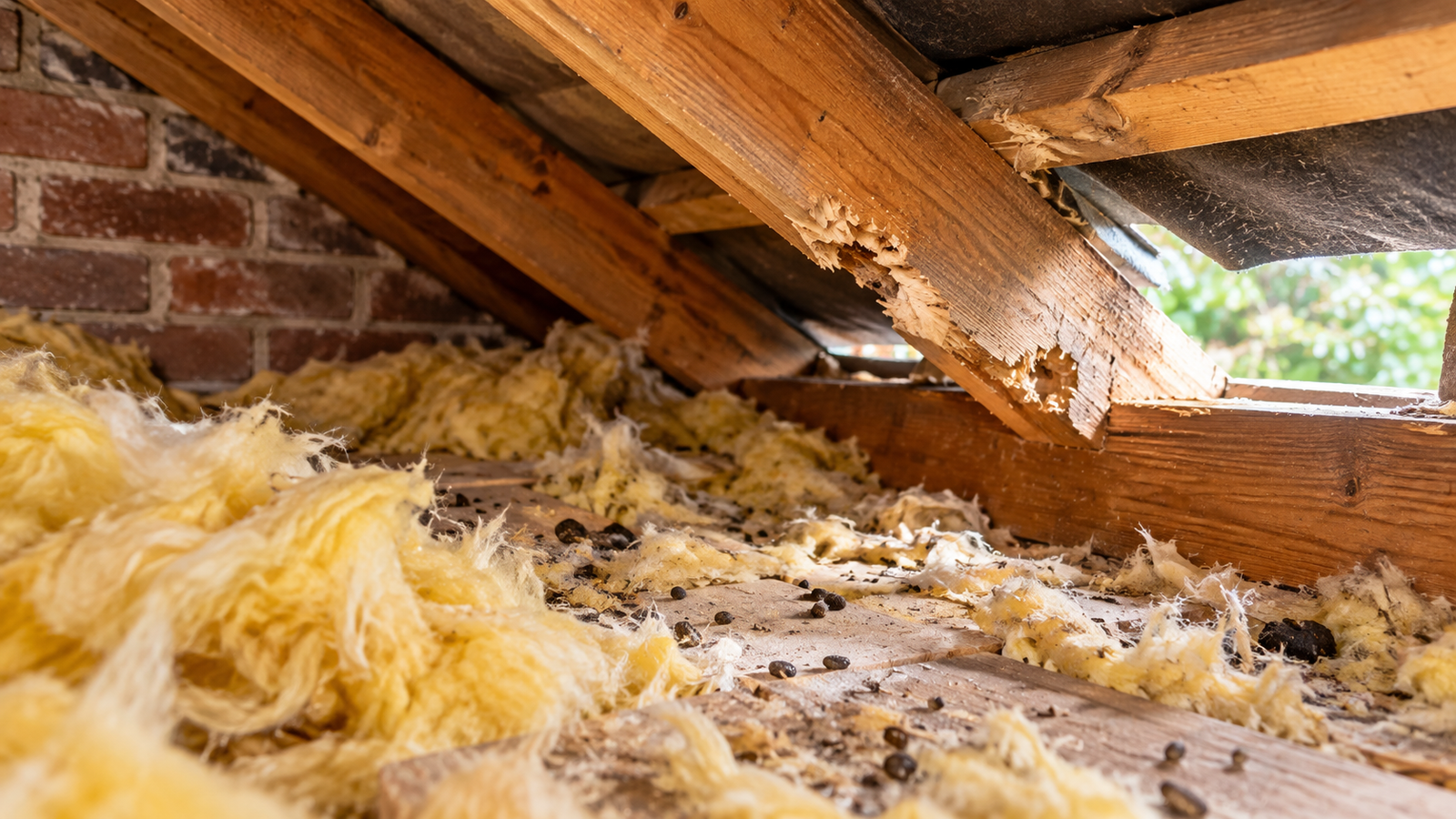
The BPCA lists the damage squirrels cause in roof spaces, including gnawing woodwork and ceilings, stripping insulation from electrical wires and tearing up loft insulation. They can also foul cold water tanks and the loft with urine and droppings. The longer they stay, the more of this there is to deal with, and repairs by other trades add to the overall bill.
Why Do Squirrels Move Into Lofts in Autumn and Winter?
Squirrels move into lofts because a roof space gives them dry, sheltered room close to their food. The BPCA notes that problems tend to peak in spring and autumn, when squirrels are out looking for food. As the nights get colder, a gap under the eaves leads straight to warm insulation.
Homes on the edge of farmland and woodland are more exposed. Around Amesbury, plenty of homes sit close to fields, hedgerows and tree belts, and an overhanging branch or a tall hedge gives a squirrel a route onto the roof. The same applies across the villages of south Wiltshire, where gardens often run straight into open countryside.
What Are the Signs of Squirrels in the Loft?
The clearest sign of squirrels in the loft is noise above the ceiling in the early hours of the morning. These are the signs to look for:
- Early morning noise: running, scratching and rolling sounds, often heaviest in the hours before daybreak.
- Chewed timber and fascias: fresh gnaw marks on roof edges, joists or the loft hatch.
- Disturbed insulation: flattened or shredded insulation, sometimes pulled into a nest.
- Droppings and staining: droppings and urine marks on boards, insulation or around the water tank.
- Squirrels on the roof: squirrels seen running along the gutter or disappearing under a tile or soffit.
Rats can make similar noises, so it is worth checking before you plan treatment. Our post on rats in the loft covers the signs that point to rodents instead.
Is Removal Enough, or Do You Need Proofing Too?
Removal on its own rarely solves the problem, because the gap that let one squirrel in will let the next one in. That is why we treat removal and proofing as one job.
Our proofing service seals the entry points we find during the inspection. Sealing has to wait until the squirrels are out, because one shut inside will cause more damage trying to escape. Doing both together avoids paying for removal a second time.
Can You Get Rid of Squirrels in the Loft Yourself?
You can make your home less attractive to squirrels, but trapping and removing them yourself is not a good idea. Grey squirrels are listed as an invasive alien species, and gov.uk guidance on invasive animal species says you must not release them into the environment or transport them. Driving a trapped squirrel to the woods and letting it go is against the law.
The same guidance says anyone controlling wildlife with traps must be trained and equipped to set them properly. If a listed animal is caught, it should be humanely killed by someone with the right training and equipment. The BPCA adds that there are no squirrel poisons available to the public and that traps should never be used without proper training.
You can still make your roof harder for squirrels to reach. These steps are safe to do yourself:
- Cut back branches: trim trees and shrubs that overhang the roof or touch the walls.
- Check the roof line: look for loose tiles, gaps at the eaves and damaged soffits after storms.
- Move bird feeders: feeders close to the house draw squirrels in and keep them nearby.
- Act on the first noise: call for an inspection as soon as you hear activity, before a nest is built.
Why Does Waiting Make Squirrel Removal Cost More?
Waiting makes squirrel removal cost more because the problem and the damage both grow over time. A single squirrel that finds a gap in autumn can be joined by others, and a nest can lead to young in the loft by early spring. More animals means more time on site.
Damage also builds up month by month. Chewed timber, stripped wiring insulation and fouled insulation all need putting right, and some of that work falls to electricians, roofers or insulation installers rather than to us. Calling early keeps the job smaller and the repairs simpler.
If you are buying an older property near woodland, it is worth checking the roof space before you move in. Our post on squirrels in the loft shows how a problem like this usually starts.
How We Deal With Squirrels in the Loft
Wiltshire Pest Services Ltd is a BPCA-certified company based in Warminster, and every technician is qualified to at least Level 2. We cover homes and businesses across Wiltshire and the borders of Somerset, Dorset and Hampshire, including squirrel problems in Amesbury and homes around Salisbury.
- Inspection first: every visit starts with an inspection of the loft and roof line to check it is squirrels and find how they get in.
- A clear quote: once we have seen the property, we give you a clear quote for removal and proofing.
- Legal, humane removal: our trained technicians deal with grey squirrels in line with the law on invasive species.
- Proofing: we seal the entry points so squirrels cannot get back in.
- Honest advice: we tell you what the job needs and nothing more, with no upselling.
- Unmarked vehicles: we arrive discreetly, so the neighbours do not need to know.
Get Help From Wiltshire Pest Services Ltd
If you can hear squirrels in your loft, call us on 07711 259749 or use the enquiry form on this page. We will inspect the property and give you a clear quote before any work starts.
FAQ
Will squirrels leave the loft on their own?
Rarely. A loft gives them shelter and a nesting site, so they usually stay and may be joined by others or raise young there.
Are squirrels in the loft dangerous?
The main risk is damage to the building. The BPCA lists gnawed woodwork, insulation stripped from electrical wires and urine and droppings in water tanks and loft spaces.
Can I catch a grey squirrel and release it somewhere else?
No. Grey squirrels are a listed invasive species, and gov.uk guidance says they must not be released into the environment or transported.
Do squirrels come back after removal?
They can if the entry points are left open, because other squirrels find the same gaps. Proofing the roof line after removal is what stops them returning.
When are squirrels in the loft most active?
The BPCA says grey squirrels are most active in the four to five hours before daybreak. That is why many people first hear them in the early hours of the morning.