Lofts are one of the most common places for wasps to build a nest. They’re warm, dry and rarely disturbed, so a nest can grow for months before anyone notices. Often the first sign is wasps going in and out under the roof tiles, or wasps turning up in an upstairs bedroom.
A wasp nest in the loft isn’t always an emergency, but it does need the right decision. This guide explains how to tell if you have one, how the nest changes through the year, when it’s safe to leave it, and when to get it treated.
Signs of a Wasp Nest in Your Loft
Wasps Going In and Out of the Roof
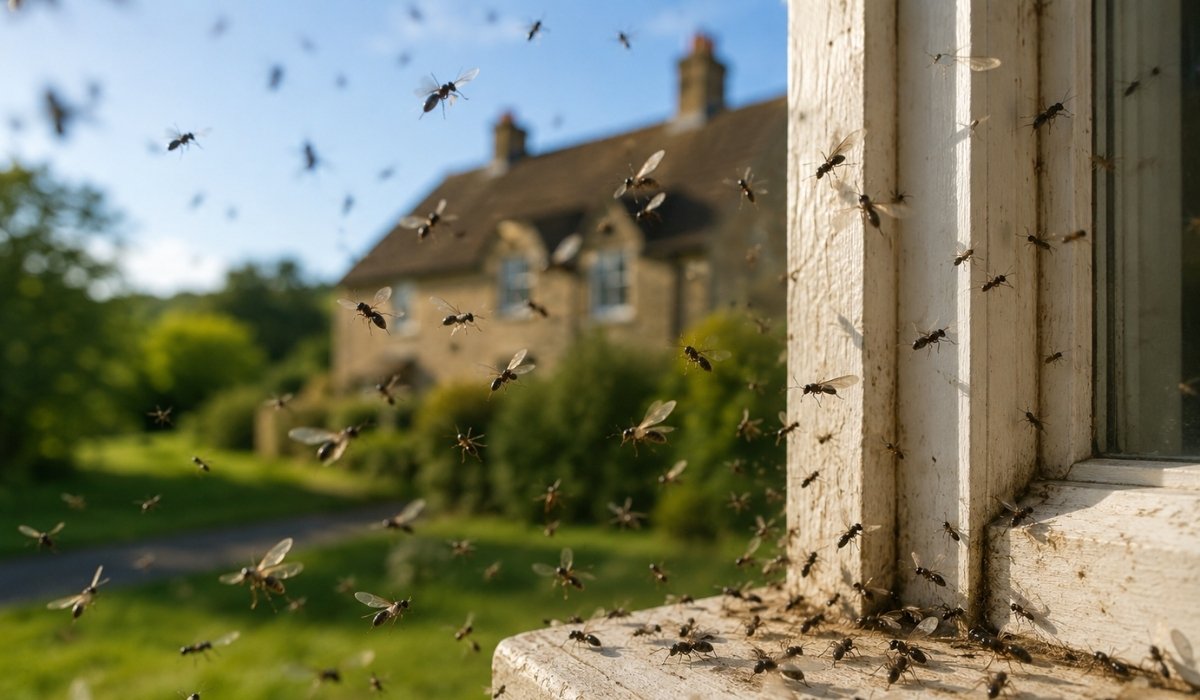
The clearest sign is a steady stream of wasps flying in and out of the same spot, usually a gap under roof tiles, at the eaves, behind a soffit or fascia board, or around a vent. Watch the roof on a warm afternoon when wasps are most active.
Scratching or Rustling Sounds
A large nest can make a faint scratching or rustling sound as wasps chew and build. You may hear it through the ceiling of an upstairs room or near the loft hatch, especially on quiet evenings.
Wasps Inside the House
Wasps appearing in upstairs rooms, around the loft hatch or near ceiling lights can mean a nest is in the loft and they’re finding a way down.
What a Wasp Nest Looks Like
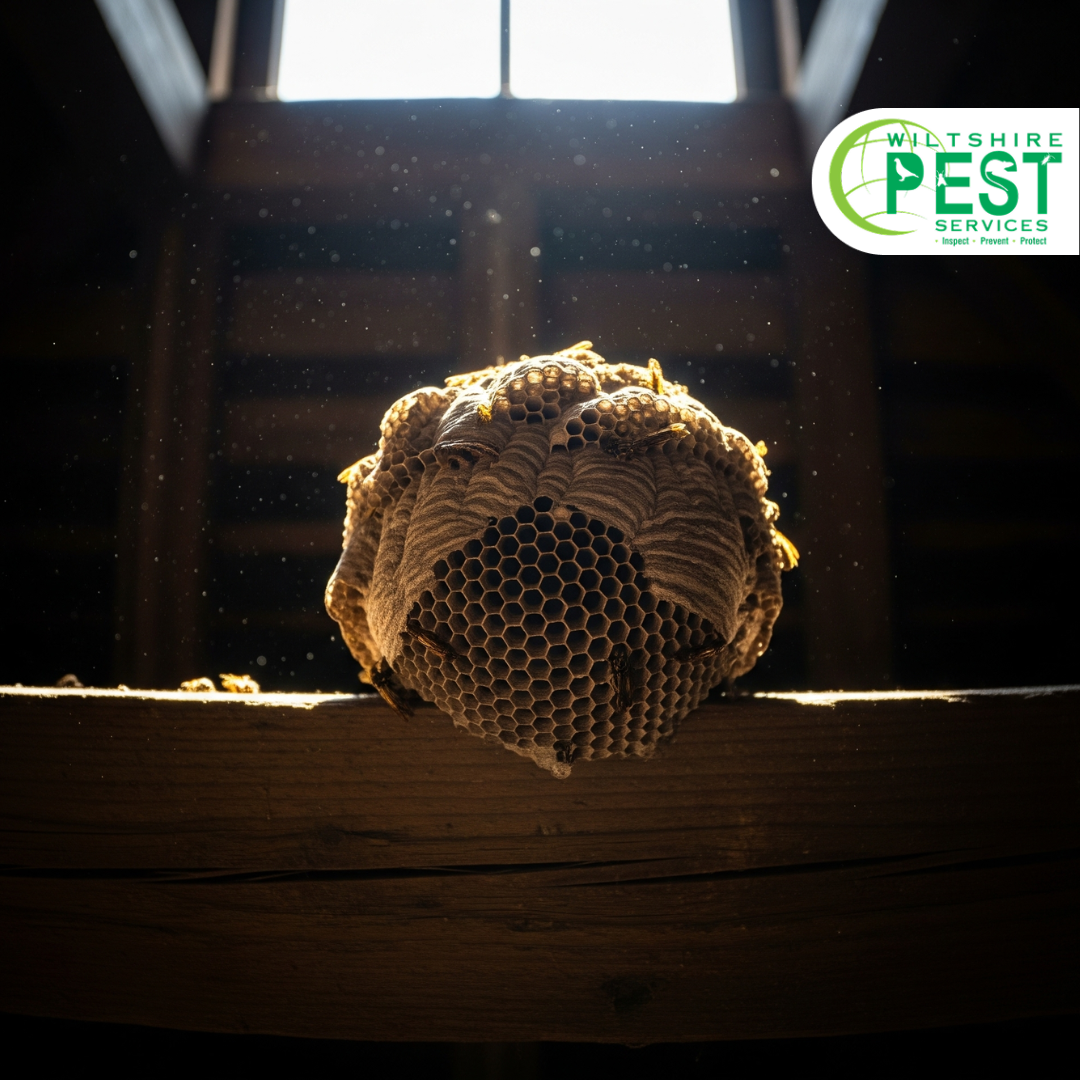
Wasp nests are made from chewed wood pulp, so they look like grey or beige paper with a swirled, shell-like pattern. In the loft they’re usually hanging from a rafter or roof beam, or tucked into the insulation or a corner. A nest starts about the size of a golf ball in spring and can grow to the size of a football or larger by late summer.
Is It Wasps or Bees?
Bumblebees, especially tree bumblebees, also nest in roofs and eaves. Bees are rounder and furrier, and their nests don’t have the papery shell of a wasp nest. Bees are important pollinators and are treated differently, so it’s worth checking before doing anything. See our bee control page for advice.
Why Wasps Build Nests in Lofts
Warm, Dry and Undisturbed
Queen wasps look for sheltered, quiet spots to start a nest in spring. Lofts are ideal: dry, warm in summer, and rarely visited. Once the nest is established, the colony can grow without interruption.
How Wasps Get In
Wasps don’t need a big opening. Gaps under roof tiles, cracks around vents, loose soffits and damaged fascia boards are all common entry points. Older properties, including many of the stone cottages and period homes around Chippenham, Devizes and Melksham, often have more of these gaps.
The Wasp Nest Life Cycle
Knowing where a nest is in its life cycle helps you decide what to do.
Spring: An Early Stage Nest
From around March to May, a queen wakes from hibernation and starts a new nest on her own. An early stage wasp nest in the loft is small, often about the size of a golf ball, with only the queen and her first eggs.
Summer: The Nest Grows Fast
Once the first workers hatch, the nest grows quickly. By July and August it can hold several thousand wasps. This is when nests are most noticeable and wasps are most defensive.
Autumn: When Do Wasps Die Off?
In late summer the nest produces new queens and males, which leave to mate. As the weather cools, the workers become sluggish and die off. In the UK, most colonies are gone by October or November. Only the new queens survive the winter, hibernating in sheltered spots.
Winter: An Old Wasp Nest in the Loft
A nest found in winter is almost always empty. Wasps don’t reuse old nests, so an old wasp nest in the loft can be left in place or removed once you’re sure it’s inactive.
Should You Leave a Wasp Nest in the Loft?
When You Can Leave It
If it’s late in the season, the nest is well away from the loft hatch and living areas, wasps aren’t getting into the house, and nobody at home is allergic to stings, it can be reasonable to leave it. The colony will die off naturally in autumn.
When It Needs Treating
It’s best to get the nest treated if wasps are getting into rooms, the nest is near the loft hatch or somewhere you use, you have children or pets at home, anyone in the household is allergic to stings, or it’s early in the summer and the nest will keep growing for months.
Do Wasps Return to the Same Nest?
No. Each nest is used for one season only. But the same loft can attract a new queen the following spring if the gaps she used are still open, so preventing access is worth doing once the nest has gone.
Can You Remove a Wasp Nest in the Loft Yourself?
We don’t recommend it. The BPCA (British Pest Control Association) advises against treating wasp nests yourself, as a disturbed nest can release hundreds of defensive wasps at once. In a loft you’re also working in a confined space, often at the top of a ladder, with a narrow hatch to escape through.
A few things to avoid:
- Don’t block the entrance hole. Trapped wasps may chew their way into the house instead.
- Don’t knock the nest down or try to bag it while it’s active.
- Don’t use water, fire or smoke. These are dangerous in a loft and rarely work.
If you’re stung and have swelling of the lips, mouth or throat, difficulty breathing or feel faint, call 999. The NHS has more advice on stings.
What Professional Wasp Nest Removal Involves
A trained technician will find the nest and its entry point, then apply a professional insecticide, usually a dust, directly into the nest or entrance. Wasps carry it through the nest, and activity normally stops within a day or two. The nest itself is usually left in place, as it won’t be reused.
Our wasp nest removal service covers homes and businesses across Wiltshire. For typical prices and what affects them, see our wasp nest removal cost guide.
How to Prevent a Wasp Nest in Your Loft
Check Your Loft in Spring
Look around the loft in April and May, when any new nest will be small. Early nests are much easier and quicker to deal with than a full summer colony.
Seal Gaps and Fit Mesh Over Vents
Once any nest has gone, repair gaps under roof tiles, around soffits and fascias, and in brickwork. Lofts need ventilation, so cover vents with fine mesh rather than blocking them. Our proofing services can help.
Do Natural Repellents Work?
Peppermint or clove oil and fake nests are often suggested, but there is little evidence they stop a queen choosing your loft. Sealing entry points and checking early in the season work far better.
Wasp Nest Removal Across Wiltshire
Wiltshire Pest Services Ltd is a BPCA-certified pest control company based in Warminster, covering homes and businesses across Wiltshire and neighbouring parts of Somerset, Dorset and Hampshire. If you’ve found a wasp nest in your loft, call us on 07711 259749 and we’ll tell you whether it needs treating and deal with it safely. Frequently Asked Questions
A nest that is left undisturbed and away from living areas is usually low risk. The danger comes when the nest is disturbed, when wasps start getting into the house, or when someone at home is allergic to stings.
We don’t recommend it. Disturbing an active nest in a confined loft space can lead to multiple stings, and professional insecticides are not available to the public. It is safer to have it treated by a trained technician.
No. Wasp nests are only used for one season. A new queen may build in the same loft the following spring if the entry points are still open, so sealing gaps helps.
Most wasp colonies die off in October or November as the weather cools. Only newly mated queens survive the winter, and they start new nests the following spring.
You don’t have to. An old nest is empty and won’t be reused. If you want it gone, wait until winter to be sure it is inactive before removing it.
It depends on where the nest is and how easy it is to reach. See our wasp nest removal cost guide for typical prices, or call us for a quote.