Warminster sits on the western edge of Salisbury Plain, surrounded by farmland, woodland and the Wylye valley. That mix of countryside and older town housing is lovely to live in, but it also means local homes see a steady run of pests through the year, from mice in the kitchen in winter to wasps under the eaves in summer.
We’re based in Warminster ourselves, so these are the pests we deal with week in, week out. This guide covers the most common household pests in Warminster, when they turn up, the signs to look for and when it’s worth getting help.
Why Warminster Homes Get Pests
Countryside on the Doorstep
Fields, hedgerows and woodland come right up to the edge of town. Rodents, squirrels, wasps and cluster flies all live and breed in the countryside, and move into homes when the weather turns or food runs short.
Older Properties
Stone cottages, Victorian terraces and older farmhouses often have gaps under roof tiles, worn pointing, broken air bricks and old drains. Each one is a way in for pests.
The Seasons
Damp autumns and mild winters keep pests active for longer. Most problems start small, so spotting the signs early makes them far easier to deal with.
The Most Common Household Pests in Warminster
1. Rats and Mice
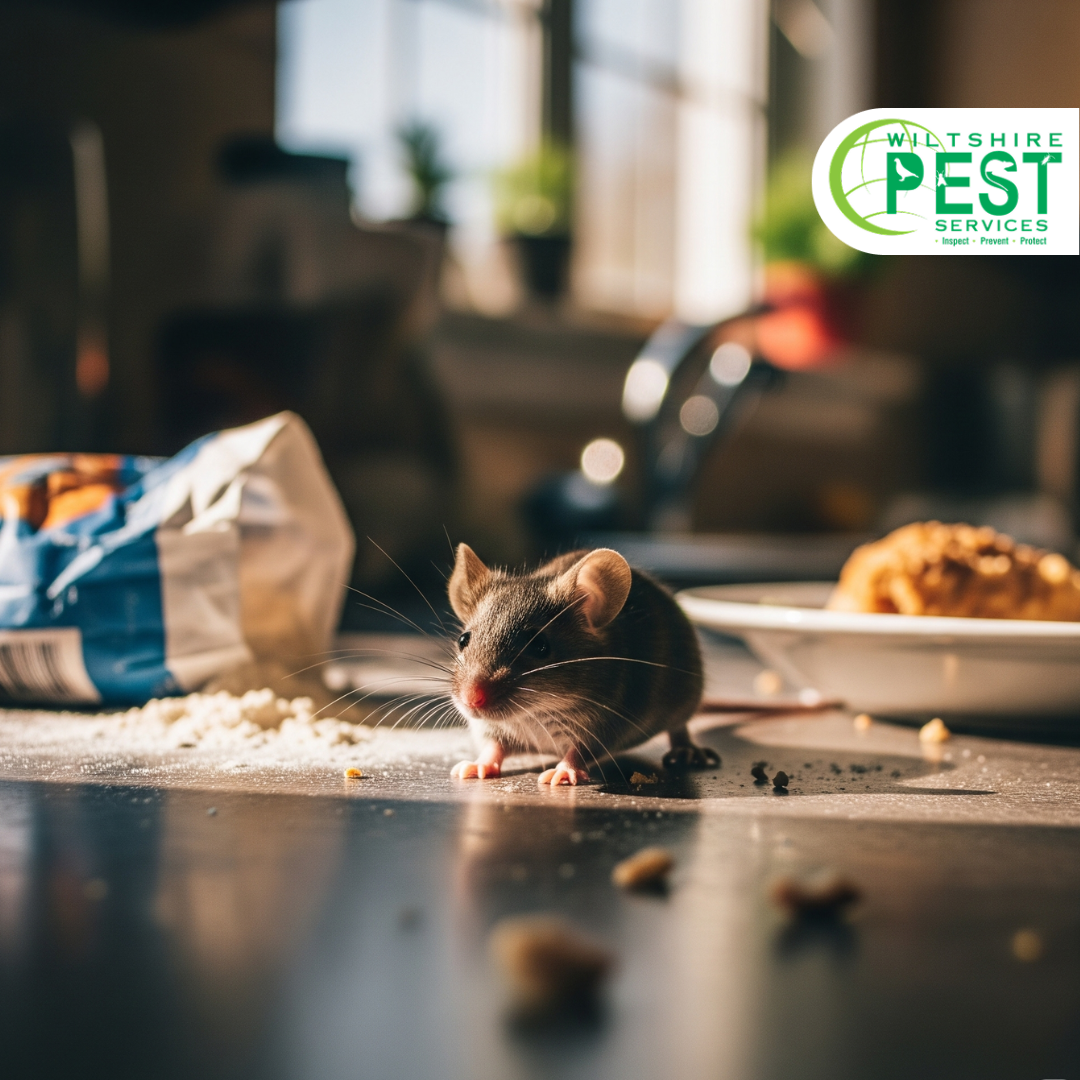
Rodents are the pest we’re called about most in Warminster, especially from autumn through winter when they move indoors for warmth. Look for droppings along skirting boards and in cupboards, chewed packaging or cables, and scratching in the walls or loft at night. Rats often get in through damaged drains as well as gaps in the building.
Read more in our guides to rats in the loft and rat infestations in your home, or see our rat control and mouse control services.
2. Wasps
Queen wasps start new nests in spring, and by late summer a nest can hold thousands of wasps. Lofts, sheds, eaves and wall cavities are favourite spots. The clearest sign is a steady stream of wasps flying in and out of one gap in the roofline. Don’t try to treat or block an active nest yourself.
See our guide to a wasp nest in the loft or our wasp nest removal service.
3. Ants
Black garden ants are the most common ant in Warminster homes. They nest outside under paving and in lawns, then follow trails indoors to sugary food and pet bowls in spring and summer. They’re a nuisance rather than a health risk, but treating the nest works far better than wiping up the trail. See our ant control service.
4. Cluster Flies
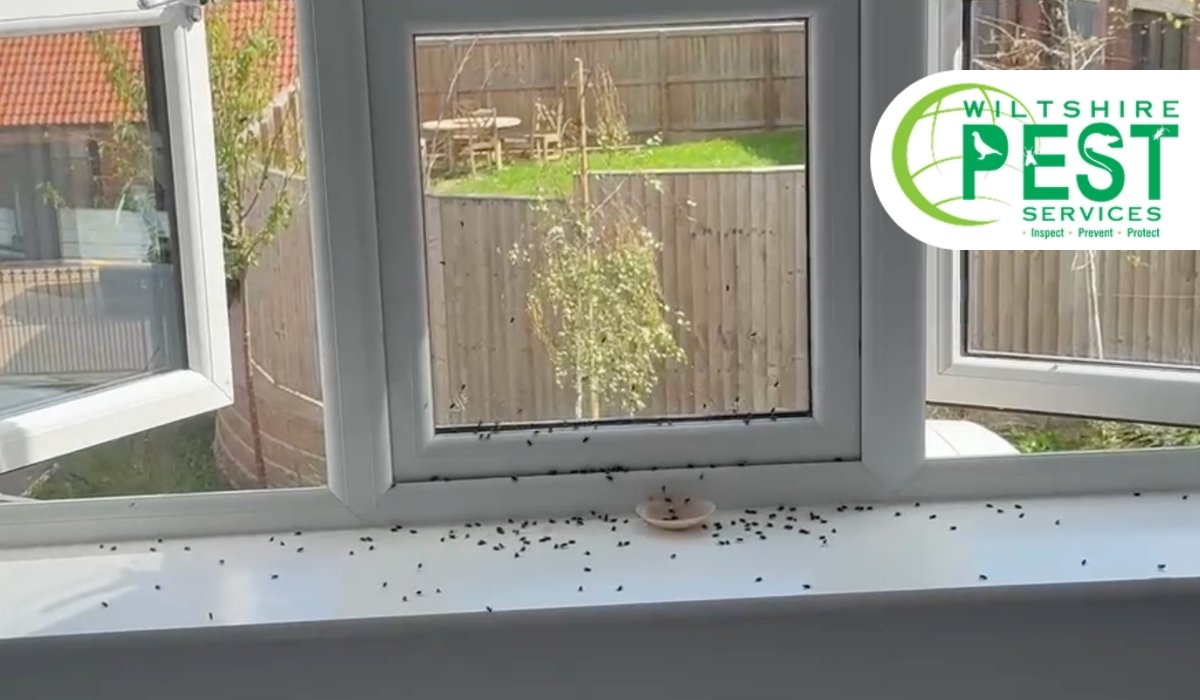
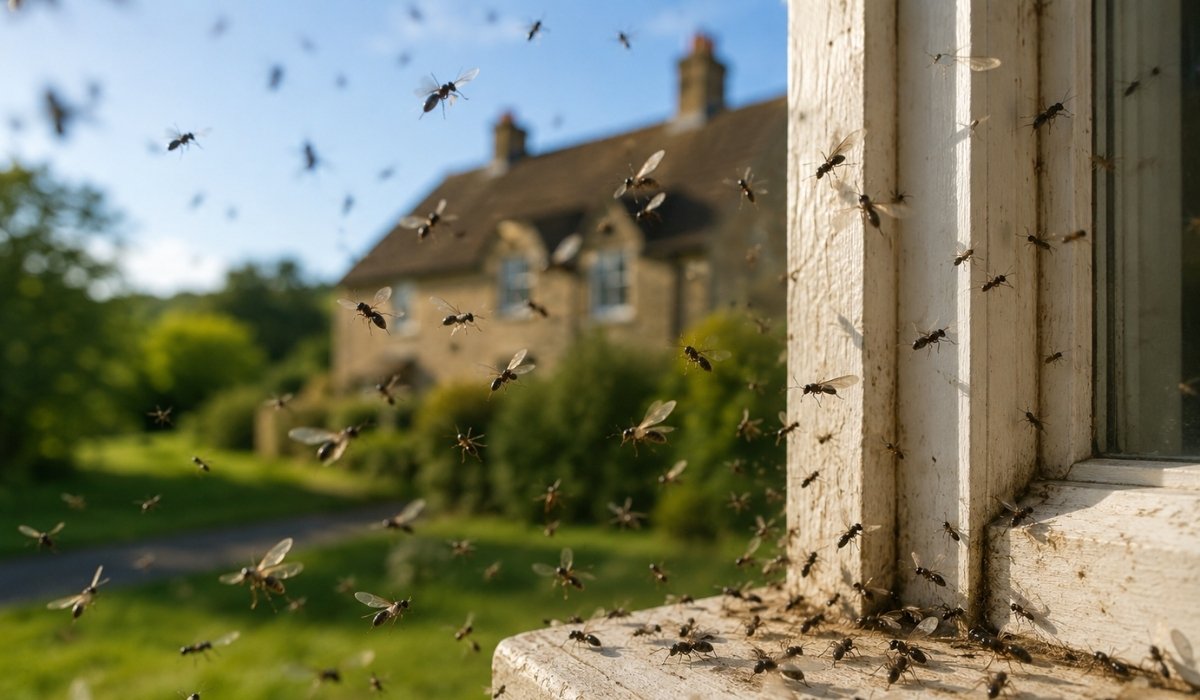
Cluster flies are a big problem in homes near open fields, which covers a lot of Warminster. In autumn they gather on sunny walls, then crawl into lofts and roof spaces to spend the winter, appearing on upstairs windows on warm days. They leave a pheromone on the building that draws the next generation back to the same house, so once you’ve had them, they tend to return every year. Regular treatment each autumn brings the numbers down over time.
Our guide to cluster flies vs house flies explains how to tell them apart.
5. House Flies and Bluebottles
Flies peak in summer, particularly near farms, stables and bins. Large numbers of bluebottles in one room can mean something has died under the floor or in the loft. Our guide on how to get rid of flies covers the common causes.
6. Clothes Moths and Carpet Beetles
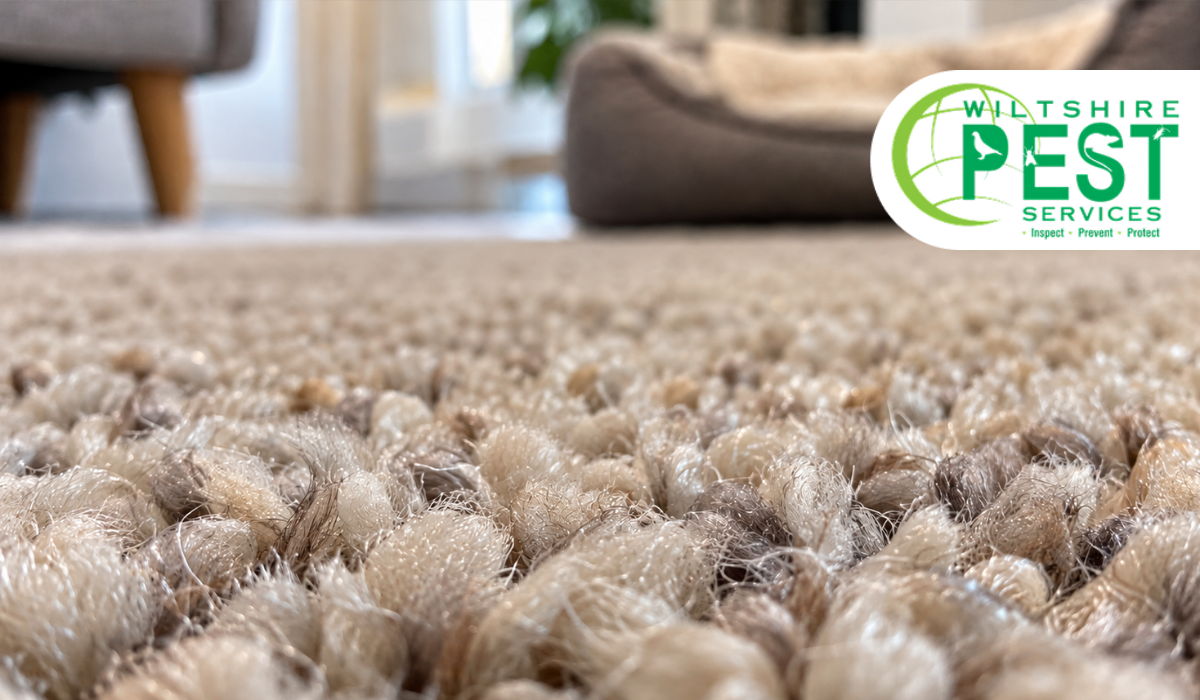
Both feed on natural fibres such as wool, silk and fur. Clothes moth larvae damage clothes in wardrobes, while carpet beetle larvae, small hairy grubs sometimes called woolly bears, leave bald patches in carpets and rugs, often under furniture and along edges. Older homes with more wool carpets and stored items see them most. See our moth control service.
7. House Spiders
From late August to October, male house spiders leave their webs to look for a mate, so they’re seen far more often. Most UK spiders are harmless. If there are a lot of them, it usually means there are plenty of insects for them to eat. See our spider control service.
8. Squirrels
Grey squirrels are common around Warminster’s woodland edges and get into lofts through gaps at the eaves or by jumping from overhanging trees. Unlike rats and mice, they’re mostly heard in the early morning and during the day. They chew timber and cables and tear up insulation. See our squirrel removal service.
9. Cockroaches
Cockroaches are less common here than in big cities, but they do turn up, usually in flats, commercial kitchens and warm, damp spots around boilers and pipework. The two UK species are the light brown German cockroach and the larger, dark brown Oriental cockroach. They carry bacteria and spread quickly, so they need professional treatment. See our cockroach control service.
10. Birds Nesting on Roofs
Pigeons nest on roofs, under solar panels and in gutters, while jackdaws often nest in chimneys. Nesting birds cause noise, mess and blocked gutters. Active nests of most wild birds are protected by law, so work has to wait until the nest is no longer in use. Our proofing services can stop birds returning.
Seasonal Pest Calendar for Warminster
| Season | Pests to watch for | Why |
| Spring | Ants, queen wasps, cluster flies leaving lofts | Warmer weather wakes pests up and queen wasps start new nests |
| Summer | Wasps, ants, flies, fleas | Nests and colonies reach full size and flies breed fast in the heat |
| Autumn | Mice, rats, house spiders, cluster flies, ladybirds, squirrels | Pests look for warm, dry shelter indoors before winter |
| Winter | Mice, rats, squirrels, clothes moths | Rodents stay indoors where it is warm, and moths keep feeding in heated homes |
Signs You May Have a Pest Problem
- Droppings in cupboards, lofts or along skirting boards
- Scratching or scurrying in the roof, walls or under floors
- Gnaw marks on food packaging, timber or cables
- Insects or flies appearing in large numbers in one place
- A stale or unusual smell from a hidden area
- Pets staring at, or scratching at, walls and skirting
Acting early usually means a quicker, simpler treatment.
How to Keep Pests Out of Your Home
Seal Gaps and Entry Points
Check around pipes, cables, air bricks, doors and roof tiles. Rodents can squeeze through surprisingly small gaps. Proofing helps with most pests, although some, such as cluster flies, can still get in through very small gaps.
Remove Food and Shelter
Store dry food and pet food in sealed containers, keep bins closed, and don’t leave pet food out overnight. Cut back plants and branches touching the house, and keep sheds, garages and lofts free of clutter.
Check Drains
Broken drains are a common hidden route for rats. If rats keep coming back with no obvious way in, a drain survey can find the problem.
When to Call a Professional
It’s worth calling us when pests keep coming back despite DIY efforts, when you suspect a nest in the loft or walls, when there’s a health risk such as wasps near children or cockroaches in a kitchen, or when you’re a landlord or business owner who needs the problem dealt with properly.
Your Local Pest Control Team in Warminster
Wiltshire Pest Services Ltd is a BPCA-certified pest control company based in Warminster, so we’re never far away. We cover the town and the villages around it, as well as the rest of Wiltshire and neighbouring parts of Somerset, Dorset and Hampshire. Find out more about our pest control in Warminster, or call us on 07711 259749.
Frequently Asked Questions
Warminster is surrounded by farmland and woodland, and has many older homes with gaps in roofs, walls and drains. That combination gives pests plenty of places to live and easy ways into houses, especially in autumn and winter.
Rats and mice are the pests we’re called about most, particularly from autumn to early spring. Wasps are the most common problem in summer.
Look for droppings along skirting boards and in cupboards, gnaw marks on packaging or cables, greasy marks along walls, and scratching noises in the loft or walls at night.
A single wasp is rarely a problem, but a disturbed nest can release many defensive wasps at once. Stings are most dangerous for anyone with an allergy. It is safest to have active nests treated by a professional.
It depends on the pest. Wasps, ants and flies peak in summer, while rodents, cluster flies and spiders move indoors in autumn. Mice and rats stay active indoors right through winter.
Small problems, such as a few ants, can often be handled with good hygiene and shop-bought products. Rodents, wasp nests, cockroaches and anything that keeps coming back are best left to a professional, who can find the source and stop it returning.